
The short answer
The 10 a.m. slump — that foggy, sluggish, suddenly-craving-something-sweet feeling — usually isn’t a willpower problem or even a sleep problem. It’s a breakfast problem. Most classic breakfasts (cereal, toast, pastries, a bagel, even a bowl of fruit on its own) are carb-heavy and protein-light, which spikes your blood sugar and then drops it an hour or two later. The fix is simple: anchor your breakfast with protein, and pair it with a slow carbohydrate and a little healthy fat. Do that and your morning energy holds steady instead of collapsing before lunch.
Why a carb-heavy breakfast backfires
After a night’s sleep your body has been fasting for hours and is primed for fuel. If the first thing you give it is fast-digesting carbohydrate — sugary cereal, white toast, a croissant, fruit juice — that glucose floods in almost immediately. Your blood sugar shoots up, you feel briefly great, and then your body releases a big wave of insulin to clear it. Blood sugar drops, often below where it started, and the crash arrives: fatigue, poor focus, and an urgent craving for more sugar to climb back out of the hole. That’s why a sweet breakfast so reliably leads to mid-morning snacking — it sets a rollercoaster in motion that you then chase all day. (This is the same blood-sugar mechanism behind steady versus unstable energy in general, which we cover in what to eat for steady, all-day energy.)
Here’s the part people miss: even “healthy” carb breakfasts can do this. Plain oatmeal or a bowl of fruit is wholesome, but eaten alone it’s still mostly carbohydrate, so blood sugar rises quickly and falls fast. The issue usually isn’t that your breakfast is unhealthy — it’s that it has nothing steady to anchor it. That anchor is protein.
Why protein is the key
Protein changes the entire equation. It digests slowly, which flattens the blood-sugar curve and gives you a gradual release of energy rather than a spike and crash. It also triggers your body’s satiety hormones, so you feel genuinely full and satisfied for hours — which quietly kills the mid-morning cravings that derail so many people’s diets. And it keeps your mind clearer: avoiding that blood-sugar crash means avoiding the fog and irritability that come with it.
You don’t need a dramatic amount. A useful target many dietitians suggest is roughly 20 to 30 grams of protein at breakfast. To put that in perspective, one egg has about 7 grams, so a two-egg veggie omelet gets you to around 14; add a pot of Greek yogurt or a glass of milk and you’re there. It’s very achievable once you start paying attention to it.
The winning breakfast formula
Every energizing breakfast combines the same three things:
- Protein — eggs, Greek yogurt (which has notably more protein than regular yogurt), cottage cheese, tofu, smoked salmon, or a protein shake if you’re rushed.
- A slow carbohydrate — oats (steel-cut or rolled), whole-grain bread, or a high-fiber bran cereal, rather than white bread or sugary cereal.
- A healthy fat — a handful of nuts or seeds, half an avocado, or a spoon of nut butter, which slows digestion further and adds staying power.
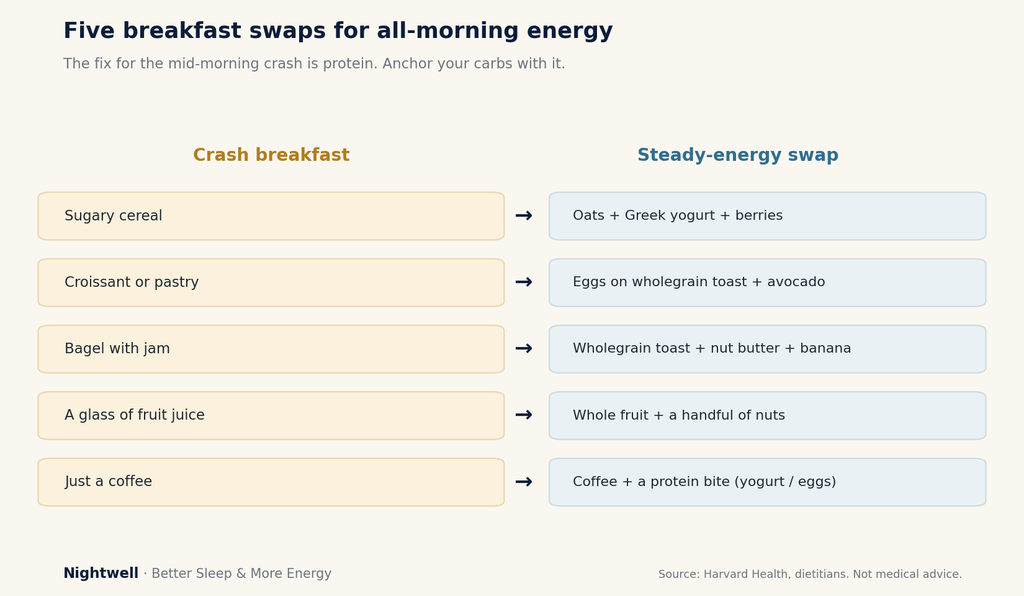
Fiber and whole fruit round it out. The graphic above shows how to turn common crash breakfasts into steady-energy versions — and the beauty is that most swaps take about the same time as pouring a bowl of cereal.
How to read a cereal box (it’s mostly marketing)
If cereal is your thing, you can absolutely make it work — but the packaging is designed to mislead, so ignore the front and read the nutrition label. Harvard Health suggests looking for a cereal with:
- 5 grams or more of fiber per serving,
- less than 5 grams of sugar per serving,
- less than 300 milligrams of sodium per serving, and
- a whole grain listed as the first ingredient.
Bran cereal, bran flakes, and steel-cut oatmeal are usually the safest bets. Then add protein (milk, Greek yogurt) and a topping of nuts or seeds, and you’ve turned a potential crash into a balanced meal.
A few grab-and-go ideas for busy mornings
“No time” is the most common reason people default to fast carbs, so here are options that take five minutes or less:
- Greek yogurt with berries and a spoon of mixed seeds or chopped nuts.
- Overnight oats made with milk or yogurt, prepared the night before.
- Two boiled eggs (batch-cook them at the weekend) with a piece of whole fruit.
- Whole-grain toast with nut butter and sliced banana.
- A protein shake blended with a banana and a spoon of oats.
The worst option for steady energy is the one many people default to: just a coffee. Caffeine on an empty stomach gives you a jolt of alertness but no actual fuel, so when it fades you’re left with the tiredness it was masking plus real hunger — a double crash. If you only do one thing, pair your coffee with a protein-rich bite.
What if you don’t eat breakfast at all?
Here’s an honest caveat, because the “breakfast is the most important meal of the day” line is partly marketing. If you skip breakfast — whether by preference or because you practice intermittent fasting — and you feel genuinely good and steady until your first meal, you don’t have to force it. The research on whether everyone must eat breakfast is mixed. What’s clear is this: the crash is driven by what you eat, not simply that you eat. So the rule holds either way — when you do have your first meal of the day, build it around protein, slow carbs, and fat rather than fast sugar. Skipping a balanced breakfast to later eat a pastry is the worst of both worlds; your blood sugar has further to climb, so the spike and crash hit even harder.
Breakfast, energy, and sleep are one system
How you fuel your morning ripples through your whole day — and into your night. A protein-anchored breakfast keeps your energy and focus stable, which reduces the reliance on caffeine and sugar that can sabotage your sleep later on. It’s worth knowing when to stop drinking coffee so your morning fuel strategy doesn’t undo your night. And if you regularly wake up and feel tired even after a full night in bed, remember that daytime fatigue has many inputs — sleep quality, hydration, and yes, what’s on your breakfast plate.
The bottom line
The mid-morning crash isn’t inevitable and it isn’t your fault — it’s the predictable result of a breakfast built on fast carbohydrate with nothing to slow it down. Anchor your first meal with 20–30 grams of protein, add a slow carb and a healthy fat, read past the marketing on cereal boxes, and keep a few five-minute options on hand for busy days. Get breakfast right and you set the tone for the entire day: steady energy, clearer focus, and far fewer trips to the snack drawer before lunch.
This article is for general information and education and isn’t medical advice. If you have a health condition affecting blood sugar or diet, please talk to a qualified healthcare professional or registered dietitian.
Sources: Harvard Health — Boost Your Energy with Breakfast; EatingWell / dietitians — High-Protein Breakfasts
Comment on “The Best Breakfast for Energy (Without the Crash)”