
The short answer
Do energy drinks work? Yes — but not in the way the marketing implies. The lift you feel is almost entirely down to two ordinary ingredients: caffeine and sugar. The taurine, guarana, B vitamins, ginseng, and exotic-sounding extras on the label do very little on their own; they’re mostly there to make a can of caffeinated sugar water sound like performance science. So an energy drink can genuinely make you feel more alert for a while — but so does a coffee, without the sugar load, the extreme variability in caffeine, and the health question marks. Here’s the honest breakdown.
What’s actually in the can
A typical energy drink is built on caffeine, a large dose of sugar (often around 40 grams — as much as or more than a cola), and a supporting cast of ingredients marketed as energy-boosting:
- Caffeine — the real active ingredient, usually 80 to 160 mg per can, though some pack 300 mg or more.
- Sugar — the source of the quick, short-lived “high” (and the crash that follows).
- Taurine — an amino acid that mainly seems to amplify caffeine’s stimulant effect, which also means amplifying its effect on heart rate and blood pressure.
- Guarana — a plant that contains its own caffeine, so it quietly adds to the total (sometimes without being counted separately on the front).
- B vitamins, ginseng, L-carnitine — included for their healthy-sounding names. Harvard’s nutrition experts note these lack solid controlled-trial evidence of boosting energy or performance at the doses used.
Strip away the branding and you’re left with caffeine and sugar in a can, plus additives whose main job is to look impressive on the label.
Why the “energy” is mostly caffeine
Caffeine works by blocking adenosine, the brain chemical that builds up through the day and makes you feel sleepy. Block it and you feel more awake and focused — that’s real, and it’s why energy drinks “work.” But notice that this is exactly what a coffee or tea does too. The other ingredients don’t add much: research on taurine and guarana shows inconsistent, weak effects on performance, and any benefit is hard to separate from the caffeine they’re riding alongside.
The sugar, meanwhile, is a trap dressed as a benefit. It gives a fast spike of energy followed by an equally fast crash — the same blood-sugar rollercoaster we cover in what to eat for steady energy. So a sugary energy drink can leave you more tired an hour or two later, which is a big reason people reach for a second one. It’s a common fuel for the afternoon slump that actually makes the slump worse.
How much caffeine is really in there?
This is where energy drinks get genuinely tricky: the caffeine content varies enormously, and it’s easy to underestimate.
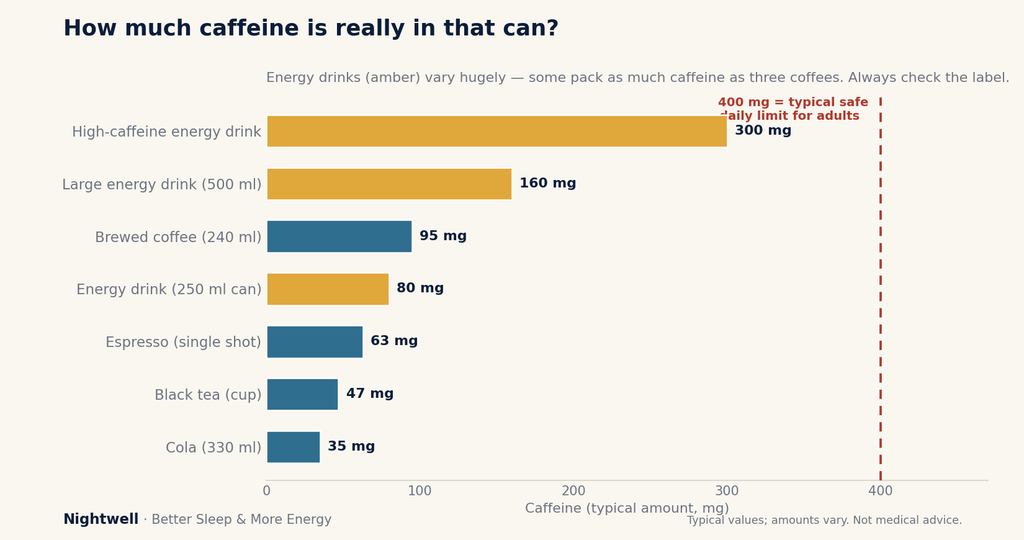
A small can might have about the same caffeine as a cup of coffee, but a large or “high-strength” drink can deliver the equivalent of three coffees in one go — and if it also contains guarana, the real total is higher still. For context, health authorities consider up to about 400 mg of caffeine a day safe for most healthy adults. One strong energy drink can put you most of the way there before you’ve had anything else. The wide, unpredictable range is exactly why it’s so easy to overdo it, so always check the label rather than assuming a can is “one coffee’s worth.”
The real risks
For a healthy adult with no heart condition, one standard energy drink now and then is unlikely to do harm. The problems come with frequency, volume, and context:
- Heart effects. Caffeine plus taurine can raise heart rate and blood pressure, and studies have picked up temporary changes in the heart’s electrical activity after energy drinks. These are usually mild and short-lived in healthy young people, but genuinely risky for anyone with an undiagnosed heart condition — and even one can has triggered palpitations in susceptible people.
- Sugar overload. Regular high-sugar drinks are linked to weight gain, type 2 diabetes, and dental erosion. Caffeine also reduces your body’s ability to clear sugar from the blood, so the sugar and caffeine together are worse for your blood sugar than either alone.
- Too many B vitamins. Energy drinks often contain far more than you need, and excess can build up — a particular concern for anyone with liver or kidney issues.
- Wrecked sleep. Caffeine late in the day reduces deep sleep and pushes your body clock back, feeding the very tiredness you drank it to fix. It’s a fast track to lying awake or waking at 3 a.m.
- Teens and alcohol. Adolescents’ developing brains are more sensitive to stimulants, and energy drinks aren’t recommended for them. Mixing energy drinks with alcohol is especially dangerous, because the caffeine masks how drunk you feel without reducing the impairment.
The honest verdict
Energy drinks aren’t poison, and an occasional one won’t hurt a healthy adult. But they’re a poor default. You’re paying a premium for caffeine you could get more cheaply and cleanly from coffee or tea, bundled with a large dose of sugar and a lot of marketing. If you like the taste and have one now and then, fine — choose a smaller or sugar-free option, don’t have it on an empty stomach, keep well under the daily caffeine limit, and never combine it with alcohol.
But if you’re reaching for energy drinks daily to get through, that’s a signal, not a solution. The can is treating a symptom. Real, lasting energy doesn’t come from a stimulant — it comes from the unglamorous basics: enough good sleep, a protein-anchored breakfast, steady meals, hydration, and movement. Get those right and you simply won’t need the crutch.
Better ways to get the same lift
- Plain coffee or tea gives you the caffeine without the sugar, the taurine interaction, or the extreme acidity.
- A short walk and some daylight genuinely boost alertness — a brisk 10–30 minutes can rival a nap for clearing brain fog.
- Water, because mild dehydration masquerades as tiredness far more often than people think.
- A 10–20 minute nap when you can — the cleanest energy reset there is.
- A slow-release snack (nuts, yogurt, fruit with protein) instead of a sugar hit that crashes.
The bottom line
Energy drinks do give you a real lift — but it’s caffeine and sugar doing the work, not the impressive-sounding extras, and the sugar half of that bargain sets up a later crash. For a healthy adult they’re fine as an occasional treat, ideally in a smaller or sugar-free form and never with alcohol. As a daily habit, though, they cost more, disrupt your sleep, and mask a tiredness that’s better fixed at the source. When you want dependable energy, the can is the expensive shortcut — and the basics beat it every time.
This article is for general information and education and isn’t medical advice. If you have a heart condition, are pregnant, or have concerns about caffeine, please talk to a qualified healthcare professional. Energy drinks are not recommended for children and adolescents.
Sources: Harvard T.H. Chan School of Public Health — Energy Drinks; UC Davis Health — How Energy Drinks Affect Your Health; UW Medicine — Energy Drinks and Caffeine