
The short answer
You can know everything about eating for energy — balanced meals, enough protein, plenty of fibre, steady blood sugar — and still fall apart at 6 p.m. when you’re tired, hungry, and staring into an empty fridge. That gap between knowing and doing is exactly what meal prep closes. By preparing food ahead when you have a little time, you make the healthy, energising choice the easy choice, so that on busy days you eat well by default instead of grabbing whatever’s fastest. You don’t need to cook the same joyless meal five times either — the smartest, most sustainable approach is to prep a handful of components and mix and match them all week.
Why meal prep is really an energy strategy
Meal prep sounds like a chore about tidiness and Tupperware, but its real value is behavioural. When you’re hungry, tired, and time-poor, your decisions get worse — that’s when the takeaway, the sugary snack, and the crash-inducing convenience food win. Every one of those choices sends your blood sugar on the spike-and-crash rollercoaster that drains your energy. Having a balanced meal ready removes that decision entirely. You’re not relying on willpower at your weakest moment; the good option is already made.
It also guarantees balance. When you prep with intention, you can make sure every meal has the protein, complex carbohydrate, and vegetables that keep energy steady — rather than the carb-heavy, protein-light meals that busy days tend to produce. And as a bonus, it saves money, cuts food waste, and helps with portion control.
Pick your style
There are three common approaches, and one is far friendlier for beginners:
- Full-meal batch cooking: make a big pot of something — chili, curry, soup, a traybake — and portion it into containers, freezing extras. Great for freezer stock, but eating the identical meal five days running leads to burnout.
- Component prep (the recommended one): batch-cook individual building blocks — a protein, a whole grain, some roasted veg, a sauce — and combine them differently each day. This is the most forgiving and flexible approach, giving you variety without repetition.
- Ingredient prep: simply wash, chop, and portion raw ingredients so weeknight cooking is faster. You still cook daily, but the tedious part is done.
Most people do best starting with component prep, so let’s build that out.
The mix-and-match formula
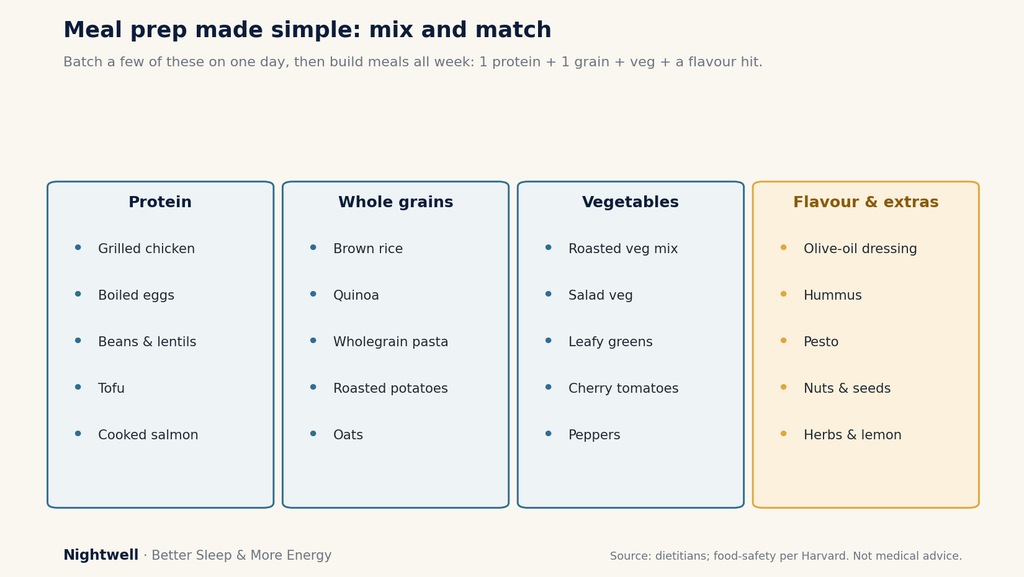
This is the whole trick, and it maps perfectly onto everything in this cluster. Spend a bit of time — a couple of hours one day, or two shorter sessions — batching a few items from each column of the board above. Then every meal for the week is just:
1 protein + 1 whole grain + vegetables + a flavour hit
The same prepped chicken, quinoa, and roasted vegetables become a grain bowl on Monday, a wrap on Tuesday, and a salad on Wednesday — just by changing the sauce and the format. You’re never eating “leftovers”; you’re assembling a fresh combination. It’s the practical, real-world version of the Mediterranean pattern: plants and whole grains front and centre, protein in supporting portions, olive oil and herbs for flavour.
A smart prep session, step by step
- Start small. Don’t try to prep seven days of three meals your first time — that’s the fast track to burnout. Pick the meal that trips you up most (usually weekday lunch) and prep just two or three days of it.
- Choose two or three recipes you already know. Confidence and speed come from familiarity; add something new only once the routine sticks.
- Cook long items first, then multitask. Get the slow things going — grains in a pot, protein and vegetables roasting in the oven — then chop and assemble while they cook. By the time the roasting’s done, everything else is ready.
- Season well. Under-seasoned prep is disappointing all week. Be generous with herbs, spices, garlic, and citrus — flavour is what makes healthy eating sustainable.
- Keep wet and dry separate. Store dressings, sauces, and anything crunchy apart from the main components until serving, so nothing goes soggy.
- Add a fresh element at eat-time. A squeeze of lemon, fresh herbs, a dollop of yogurt, or a handful of nuts instantly brightens prepped food.
Don’t skip the breakfast and snack prep
The meals people most often get wrong when rushed are breakfast and snacks — the exact ones that make or break your energy. A few minutes of prep fixes both. Make a batch of overnight oats or hard-boil a carton of eggs so a protein-rich breakfast is grab-and-go. And portion out balanced snacks — nuts into small bags, veg sticks with a pot of hummus — so the steady option is the convenient one when the mid-afternoon dip hits.
Food safety: the boring part that matters
Prepping ahead only helps if the food stays safe and appetising, so a few basics (in line with food-safety guidance from bodies like Harvard’s public health school):
- Cool food before refrigerating, then store it promptly. Keep your fridge at or below about 4 °C (40 °F).
- Most prepped meals keep 3–5 days in the fridge. Anything you won’t eat within that window, freeze — leaving a little space in the container for expansion.
- Label with the date and use the oldest first, so nothing gets forgotten at the back.
- Avoid cross-contamination: use separate boards for raw meat and produce.
- Reheat thoroughly to a proper hot temperature before eating.
Glass containers with locking lids are worth the investment — microwave-safe, stain-resistant, and long-lasting.
Consistency, not perfection
The point of meal prep is to make your life easier, not to run a restaurant kitchen every Sunday. Some weeks you’ll prep four days of lunches; some weeks it’ll be two, plus a bag of washed salad and some boiled eggs. Both are wins. Build in a “cook fresh” night or two so you’re not locked into containers, and don’t aim for a perfectly optimised week — aim for a system you’ll actually repeat. A modest habit you keep beats an ambitious one you abandon.
The bottom line
Everything else in this collection — steady blood sugar, protein at every meal, fibre, whole foods, sensible timing — only helps if it survives contact with a busy week. Meal prep is what makes it survive. Batch a few simple components when you have a little time, mix and match them into varied meals, keep breakfast and snacks ready to grab, and store it all safely. Do that and you turn good intentions into an effortless default: balanced, energising food waiting for you exactly when your willpower is lowest — which is the whole secret to eating well, and feeling energised, for the long run.
This article is for general information and education and isn’t medical advice. If you have specific dietary needs or a health condition, please talk to a qualified healthcare professional or registered dietitian.
Sources: Meal Prep for Beginners: Batch-Component Approach; Healthy Food Guide — Meal Prep for Beginners