
The short answer
If protein was the nutrition buzzword of the last decade, fibre is the quiet one that deserves the spotlight now. It’s the part of plant food your body can’t digest — and that’s exactly why it’s so valuable. Fibre steadies your blood sugar (and therefore your energy), keeps you full, feeds the good bacteria in your gut, lowers cholesterol, and keeps digestion running smoothly. Yet most people get only about half the recommended amount. Aim for 25 to 38 grams a day, mostly from whole plant foods, add it gradually with plenty of water, and you’ll feel the difference in your energy, your appetite, and your gut.
What fibre actually is
Fibre is a type of carbohydrate found in plant foods that your digestive enzymes can’t break down. Because it isn’t absorbed like other carbs, it passes through your system doing useful work along the way rather than being turned into blood sugar. There are two main kinds, and most plant foods contain both:
Soluble fibre dissolves in water to form a gel. That gel is the hero of the energy story: it slows down digestion, which blunts the blood-sugar spikes and crashes that leave you tired. It also lowers LDL (“bad”) cholesterol and feeds beneficial gut bacteria. You’ll find it in oats, beans, peas, apples, bananas, avocados, citrus fruit, carrots, and barley.
Insoluble fibre doesn’t dissolve. Instead it adds bulk and helps food move efficiently through your gut — nature’s “sweeper,” keeping you regular and preventing constipation. It’s in whole grains, wheat bran, nuts, vegetable skins, and vegetables like cauliflower and green beans.
You don’t need to track the two types separately. Eating a variety of whole plant foods naturally gives you both.
Why fibre is an energy nutrient
Fibre rarely gets mentioned in “energy” advice, but it belongs there for two reasons.
First, steady blood sugar. When soluble fibre forms its gel, it slows the release of glucose from your food into your bloodstream. Instead of a fast spike followed by a crash, you get a gradual, sustained release — the very definition of steady energy. This is why a bowl of oats keeps you going for hours while sugary cereal drops you before mid-morning, and it’s the same principle behind eating for steady energy in general. The evidence for soluble fibres like oat beta-glucan and psyllium blunting post-meal blood sugar is genuinely strong.
Second, your gut microbiome. The trillions of bacteria in your gut ferment fibre and produce compounds called short-chain fatty acids, which reduce inflammation, strengthen your gut lining, and support your immune system. A well-fed, healthy gut is increasingly linked to better energy, mood, and overall wellbeing — and fibre is its primary fuel. Skip the fibre and you starve the very bacteria that help keep you well.
The other benefits
Fibre’s payoff goes well beyond daily energy:
- Fullness and appetite. High-fibre foods are bulky and slow to digest, so they keep you satisfied and naturally curb overeating — helpful for weight management.
- Heart health. Getting enough fibre is associated with substantially lower cardiovascular risk; some research links 25–30 grams a day to a large reduction in death from heart disease, partly through lower cholesterol.
- Blood sugar and diabetes. By smoothing glucose absorption, fibre helps control blood sugar and lowers the risk of type 2 diabetes.
- Digestion and regularity. Insoluble fibre keeps things moving and helps prevent constipation and related problems.
How much do you need — and the gap most people have
Experts recommend adults get roughly 25 to 38 grams a day (around 25 for women, 38 for men, or 14 grams per 1,000 calories). The reality is stark: average intake sits around 13 to 15 grams — about half the target — and by some estimates only a small fraction of people hit the recommended amount. That shortfall is one of the most common, and most fixable, gaps in the modern diet, driven largely by ultra-processed foods that have had their fibre stripped out.
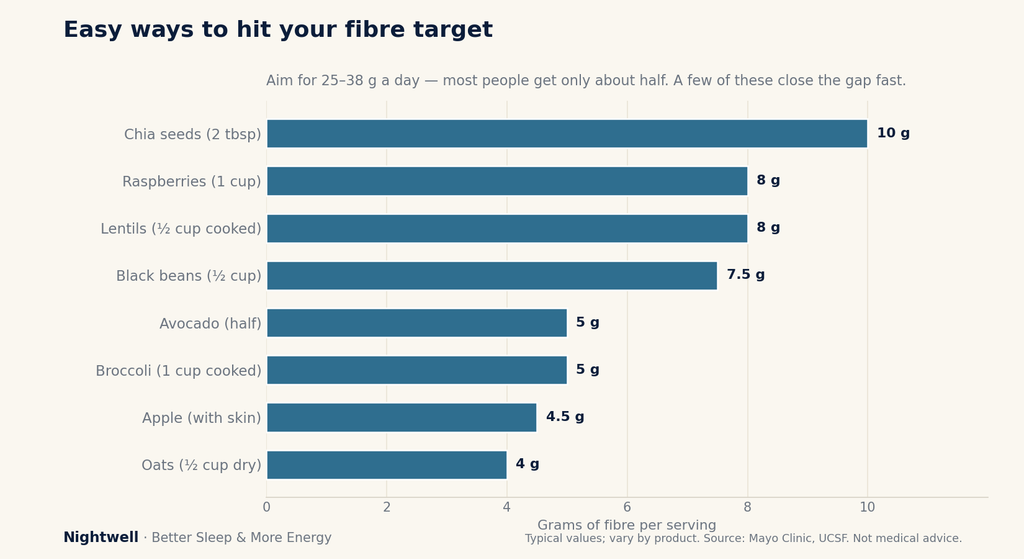
The graphic above shows how quickly whole foods close the gap: a couple of tablespoons of chia seeds, a cup of raspberries, or half a cup of lentils each deliver a big chunk of your daily target in one serving.
How to get more — the right way
Here’s the crucial part, because the most common fibre mistake isn’t eating too little — it’s adding a lot too fast. Pile on fibre overnight and you’ll likely get bloating, gas, or even constipation. Do it gradually instead:
- Increase slowly over a few weeks, giving your gut time to adjust.
- Drink more water as you add fibre. Insoluble fibre absorbs water to do its job, so without enough fluid it can back you up rather than keep you regular — hydration and fibre work as a team, which is another reason to stay on top of your water intake.
- Build it into meals you already eat: start the day with oats or a high-fibre cereal, add beans or lentils to soups and salads, keep the skin on your fruit and vegetables, choose whole grains over refined, and sprinkle seeds onto yogurt.
- Snack on fibre. Fruit, vegetables with hummus, nuts, and popcorn are all easy high-fibre options — and pairing them with protein keeps energy steady, exactly the no-crash snack approach we recommend.
- Front-load fibre at breakfast, where most people’s fibre (and protein) is lowest — a simple swap that steadies your whole morning, as covered in the best breakfast for energy.
Whole foods vs supplements
Fibre supplements like psyllium have a legitimate role — they can help if you’re struggling to reach your target or managing a specific issue. But for most people, whole foods win, because they deliver fibre alongside vitamins, minerals, and a mix of both fibre types that a single supplement can’t match. Think of supplements as a backup, not a substitute for a plant-rich plate. And you can overdo it: intakes far above the recommended range (roughly 50–60 grams a day and up) can actually cause digestive trouble and interfere with mineral absorption, so more isn’t automatically better here either.
The bottom line
Fibre is one of the most underrated nutrients for feeling good day to day. It flattens the blood-sugar swings that drain your energy, keeps you full, feeds a healthy gut, and protects your heart — and most of us get only half of what we need. The fix is refreshingly simple: eat more whole plant foods, keep the skins on, lean on oats, beans, fruit, vegetables, nuts and seeds, and build up gradually with plenty of water. Close your fibre gap and you’ll hand yourself steadier energy, better digestion, and a long list of health benefits — all from the part of food your body can’t even digest.
This article is for general information and education and isn’t medical advice. If you have a digestive condition such as IBS or diverticular disease, please talk to a qualified healthcare professional or registered dietitian before making big changes to your fibre intake.
Sources: Mayo Clinic — Dietary Fiber; Dartmouth Health — How Much Fiber Do You Need?; UCSF Health — Increasing Fiber Intake