
The short answer
Cold showers and breathing exercises are two of the most hyped “energy hacks” going — and here’s the honest verdict: both genuinely work for a quick lift, but the marketing wildly oversells the rest. A blast of cold triggers a real surge of the alerting chemical noradrenaline, and controlled breathing can dial your nervous system up or down on demand. Used sensibly and safely, they’re handy free tools for a fast hit of alertness or a moment of calm. What they’re not is a cure for chronic tiredness, a detox, or a replacement for sleep, food, and movement.
Cold showers: the real effect and the overblown claims
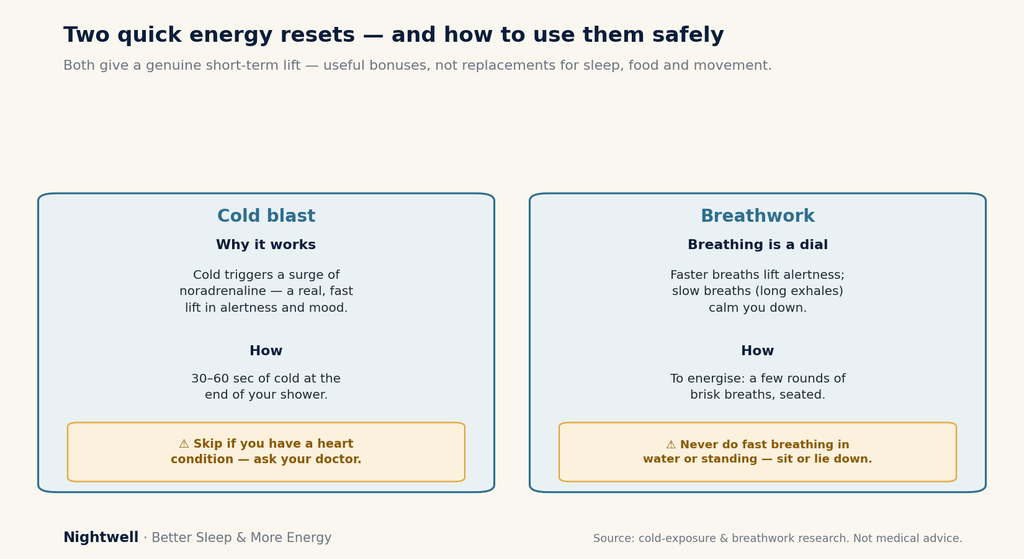
When cold water hits your skin, temperature sensors fire off a jolt to your nervous system, releasing noradrenaline — a chemical that sharpens alertness, focus, and mood. This is the genuine, well-supported part: many people feel more awake and clear-headed after a cold shower, and the effect kicks in fast. It works through a principle called hormesis — a brief, controlled stressor that leaves you feeling energised and, over time, a bit more resilient, in the same family as exercise.
Where it gets shaky is the bigger promises. Cold exposure is marketed as a way to “detox,” turbo-charge your immune system, melt fat via brown-fat activation, and treat all manner of ills. The evidence for those claims is far weaker than the confident marketing suggests — the honest science supports a real short-term boost to alertness and mood, plus gradual improvements in cold tolerance, but not the miracle-cure list. So enjoy the wake-up jolt; just don’t expect it to fix your health on its own.
How to do it: you don’t need an ice bath. Finishing your normal shower with 30 to 60 seconds of cold is plenty. You’re after the stimulating effect, not hypothermia — and you can always warm back up afterward.
An important safety note: cold-water exposure is a real cardiovascular stressor — it briefly spikes heart rate and blood pressure. For most healthy people that’s fine, but if you have a heart condition or any cardiovascular concern, check with your doctor before making cold showers a habit.
Breathing: your nervous system has a dial
Breathing is the one bodily function that’s both automatic and fully under your conscious control — which makes it a surprisingly direct lever on how you feel. The key insight is that breathing works like a dial:
- Slow breathing calms you down. Techniques like box breathing, the 4-7-8 pattern, and simply making your exhale longer than your inhale activate the parasympathetic “rest and digest” system, lowering stress and heart rate. This is the go-to when you’re wired or anxious — and a genuinely useful tool for the stress that drains your energy, as we cover in stress, burnout and energy.
- Faster breathing revs you up. A few rounds of brisk, deliberate breaths do the opposite: they trigger a mild sympathetic “fight or flight” response, releasing adrenaline and noradrenaline and pushing your brain toward heightened alertness. This is the energising direction — a natural pick-me-up without caffeine.
The popular Wim Hof Method combines rapid breathing, breath-holds, and cold exposure, and research does confirm it can raise adrenaline and, for many, improve mood, alertness, and stress resilience within a few sessions. But as with cold, the claims often outrun the evidence — the solid findings are about short-term arousal and mood, not curing disease.
The safety point you must not skip
This matters more for breathing than for cold, so read it carefully. Fast, hyperventilation-style breathing can make you light-headed and, in some cases, cause you to faint. That means you must never do energising/rapid breathing in water, in the shower, or standing up where a blackout could be dangerous — always practise seated or lying down on dry land. Rapid breathing can also intensify anxiety or trigger a panic attack in people prone to them, and it isn’t suitable for everyone. If you have a history of fainting, a heart condition, are pregnant, or have an anxiety disorder, talk to a healthcare professional before trying intense breathwork. Slow, gentle breathing, by contrast, is safe for almost everyone.
When (and when not) to reach for these
Used with clear eyes, both are legitimately useful in the right moment:
- Morning wake-up: a short cold blast at the end of your shower is a great addition to an energising morning routine.
- The afternoon dip: a few brisk breaths (seated) or a quick cold splash can be a caffeine-free reset for the afternoon slump.
- Feeling stressed or scattered: slow breathing with long exhales is the calmer, always-safe option to settle your nervous system.
What they can’t do is paper over the fundamentals. If you’re relying on cold showers and breathing tricks to survive on too little sleep or a poor diet, you’re treating symptoms. These are the sprinkles, not the cake — genuinely nice additions on top of the basics laid out in how to get more energy naturally, but no substitute for them.
A quick lift vs a lasting change
It’s worth being clear about what kind of benefit you’re actually getting, because this is where a lot of confusion (and disappointment) comes from. The energy and mood boost from both cold and brisk breathing is mostly acute — it’s the noradrenaline and adrenaline hit in the moment, and it fades within an hour or two, much like a coffee. That’s genuinely useful as an on-demand reset, but it’s not something that accumulates into a permanently higher baseline of energy.
What does build with consistent practice is different: your tolerance to cold improves, and the repeated controlled stress may make you a little more resilient to everyday stressors over time (the hormesis effect). So think of it in two layers — reach for a cold blast or a few brisk breaths when you want an immediate lift, and if you enjoy the practice, keep it up for the slower resilience benefits. Just don’t expect either to quietly raise your all-day energy the way fixing your sleep, diet, and movement will. If your baseline energy is low, that’s where the real work is.
The bottom line
Cold showers and breathwork aren’t snake oil, and they aren’t miracles — they sit honestly in between. A cold blast delivers a real, fast lift in alertness and mood through a noradrenaline surge; controlled breathing lets you dial your nervous system up for energy or down for calm. Both are free, both work in the moment, and both are worth a try — provided you do them safely: keep cold showers off-limits if you have a heart condition, and never do rapid breathing in water or standing. Treat them as useful bonus tools, keep your expectations realistic about the grander claims, and remember that real, lasting energy still comes from the boring, powerful basics.
This article is for general information and education and isn’t medical advice. If you have a heart condition, a history of fainting, an anxiety disorder, or are pregnant, please talk to a qualified healthcare professional before trying cold exposure or intense breathwork.
Sources: Medical News Today — The Wim Hof Breathing Method (benefits and risks); The Wim Hof Method: What the Research Actually Says; Cold exposure and breathing on cardiovascular and psychological measures (NIH)