
The short answer
Stress is one of the biggest, most invisible drains on your energy — and left unchecked it can tip into burnout, a state of deep exhaustion that no amount of sleep seems to fix. The key thing to understand is that stress feels like energy but is really borrowed power: your body floods with cortisol and adrenaline to help you push through, and if that never switches off, the bill comes due as fatigue, fog, and detachment. The way out isn’t to push harder — it’s to genuinely recover: lower the load, protect real rest, and, when it’s serious, get support.
Why stress drains your energy
In the short term, stress is almost a chemical gift. When you face a challenge, your body releases adrenaline and cortisol, raising your heart rate, blood pressure, and blood sugar so you can rise to the moment. It feels like energy — but it’s closer to borrowed power, a system built for short bursts of “fight or flight,” not months on end.
The problem starts when stress becomes chronic. Research on cortisol shows that prolonged stress flattens its normal daily rhythm — the healthy steep rise in the morning and fall at night gets blunted. People end up feeling the worst of both worlds: exhausted but wired, unable to relax yet unable to truly get going. Crucially, altered cortisol also interferes with deep, restorative sleep, so your nights become a pause button rather than a real recharge. That’s a big reason chronically stressed people wake up tired even after a full night in bed.
When stress becomes burnout
Burnout is what happens when chronic, unmanaged stress — often from work, but not only — goes on too long with too little recovery. Health authorities describe it through three hallmarks: exhaustion, cynicism or detachment, and a reduced sense of effectiveness. You feel drained, you start going numb or negative about things that used to matter, and you feel like you’re working harder while achieving less.
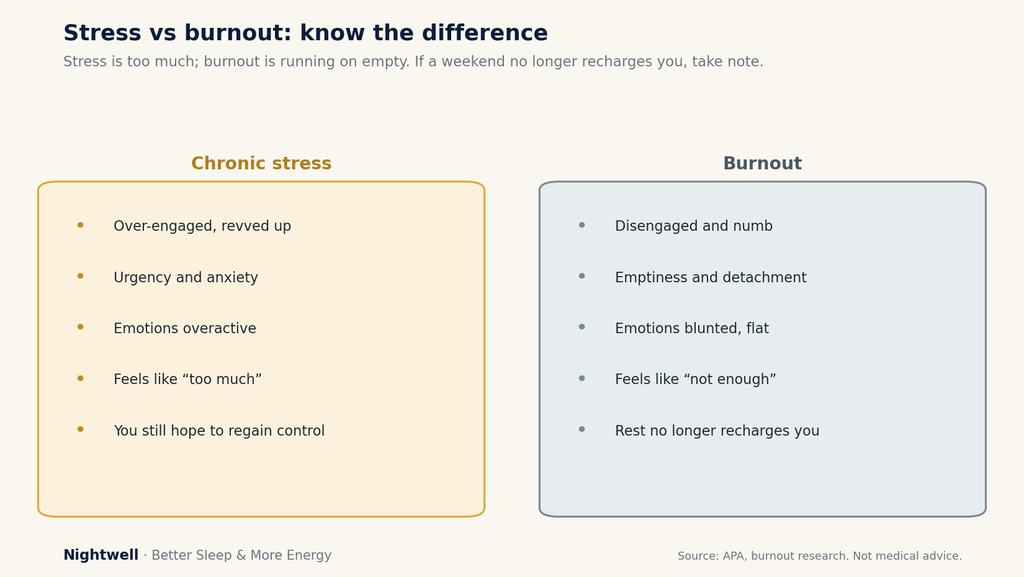
The most useful way to tell stress and burnout apart is captured in the graphic above. Stress is a state of too much: you’re over-engaged, anxious, and revved up, but you still believe that if you could just get on top of things, you’d be okay. Burnout is a state of not enough: you’re disengaged, empty, and detached, your emotions feel flat, and — the clearest warning sign of all — rest stops recharging you. When a weekend or a holiday no longer leaves you restored, your system has slipped from stress mode into something that needs real attention.
The energy trap: masking with caffeine and sugar
Here’s the cycle that keeps people stuck. As stress-driven fatigue sets in, the natural response is to reach for caffeine to power through and sugar for a quick lift. But both mask the problem while making it worse: caffeine late in the day further wrecks the sleep you desperately need, and the sugar spike-and-crash adds its own energy rollercoaster. Running your day on stimulants and sugar is a sign your system is stuck in “stop the damage” mode rather than genuinely recovering. Breaking that loop — steadier eating, smarter caffeine — is part of the fix, and it connects to the wider picture in how to get more energy naturally.
How to actually recharge
Recovery from stress and early burnout is real and often faster than people expect — many notice meaningful improvement within a few weeks of genuine changes — but it requires recovery, not willpower. As one physician puts it, burnout isn’t something you push through with more discipline; your body is telling you something, and the sooner you listen, the faster you heal. The core moves:
- Lower the load. This is the one people skip, and it’s the most important. Overwork — professional, family, and social — is a leading cause. Streamline your must-dos, prioritise ruthlessly, delegate, and practise saying no. Protecting your time and energy is self-respect, not selfishness.
- Set boundaries around work. Define when the workday ends, keep work out of the bedroom, and give yourself genuine off-time where you’re not reachable.
- Protect real rest and downtime. Recovery happens during actual rest, not “productive” busyness. Build in unstructured time, hobbies, and true breaks — scrolling your phone while anxious doesn’t count.
- Prioritise sleep. It’s the foundation of stress recovery, and stress and sleep feed on each other. A calm evening wind-down routine helps break the “tired but wired” cycle.
- Move your body. Exercise is one of the best-proven stress relievers — it burns off stress chemicals, lifts mood, and improves sleep. Even a daily walk counts.
- Down-regulate on purpose. Slow breathing, meditation, yoga, tai chi, and time in nature actively shift you out of fight-or-flight. A few minutes of long, slow exhales genuinely calms the nervous system.
- Lean on people. Talking with a friend, family member, or support group diffuses stress — isolation makes it worse.
- Eat to steady, don’t spike. Balanced meals with protein, fibre, and healthy fats support steadier energy than running on sugar and caffeine.
When to get professional help
This is important, so it gets its own section. Stress and burnout overlap heavily with anxiety and depression, and the physical symptoms — deep fatigue, brain fog, changes in sleep and appetite — can also mimic conditions like an underactive thyroid or anemia. So if your exhaustion is severe, if it persists despite genuine changes, or if you’re experiencing low mood, hopelessness, or a loss of interest in life, please talk to a doctor or a mental-health professional. That isn’t a last resort or a sign of weakness — it’s often the fastest route to recovery, and it makes sure nothing treatable is being missed. (One note: you may see the term “adrenal fatigue” online; it’s a popular label, but it isn’t a recognised medical diagnosis, and the real, testable causes of persistent fatigue are worth investigating properly with a professional.)
The bottom line
Stress steals your energy by keeping your body in a state it was only ever meant to visit briefly — and when it never lets up, that borrowed power runs out as burnout. The antidote isn’t more grit; it’s real recovery. Lower your load, set boundaries, protect genuine rest and sleep, move your body, calm your nervous system, and stay connected to people. Do that and your energy tank starts to refill. And if rest alone isn’t putting it back — if a weekend no longer recharges you — treat that as your body’s clearest signal to slow down and reach out for support. Listening early is what makes recovery quick.
This article is for general information and education and isn’t medical advice. If you’re experiencing severe or persistent exhaustion, low mood, or symptoms of burnout, anxiety, or depression, please talk to a qualified healthcare or mental-health professional.
Sources: Stress vs Burnout: Signs and Differences; Welia Health / APA — Burnout vs Stress; Signs You’re Running on Stress Instead of Energy
Comments on “Stress, Burnout and Your Energy: How to Recharge”