
Tired all day, not just after lunch? Out of breath on stairs that never used to bother you? Cold hands, headaches, a bit paler than usual? Any of those can have a dozen explanations. But together, and if they’ve crept up over months, low iron is one of the first things worth ruling out.
Here are the seven things we think are most useful to know — including a couple that most articles on this topic skip.
1. It’s the most common nutrient deficiency in the world
Iron is what lets your blood carry oxygen. It’s the core of hemoglobin, the protein in red blood cells that picks up oxygen in your lungs and delivers it everywhere else. When iron runs short, you make less hemoglobin, less oxygen reaches your muscles and brain, and you feel it as a flat, heavy tiredness that sleep doesn’t fix.
The advanced stage is iron-deficiency anemia. But your body’s iron stores can run low well before that point, and some research suggests people with low stores but normal hemoglobin — particularly women — can still feel noticeably fatigued. That matters for the test you ask for (see point 5).
2. Most signs are vague. A few are oddly specific.
The common ones — tiredness, weakness, breathlessness, dizziness, headaches, pale skin, cold hands and feet, a pounding heartbeat — overlap with plenty of other things. On their own they prove nothing.
A few signs point more clearly toward iron. Craving ice to chew on is a classic one. So are restless legs in the evening, brittle or spoon-shaped nails, hair shedding more than usual, and paleness on the inside of the lower eyelid. If you’ve got one or two of these plus ongoing tiredness, that’s a reasonable prompt to get tested.
3. Some people are far more likely to be low
According to the Merck Manual, blood loss is the most common cause of iron deficiency in adults. In practice that means the people most at risk are:
- Women with periods, especially heavy ones. Premenopausal women need more than twice as much iron as men.
- Pregnant women, whose blood volume and needs rise sharply.
- Vegetarians and vegans, because plant iron is absorbed less well. A well-planned plant-based diet can cover it, but it takes a bit of thought.
- Endurance athletes and regular blood donors.
- People with coeliac disease or other gut problems, or on long-term acid-reducing medication.
And one point we’d underline: in men and in women after menopause, low iron usually isn’t about diet. It often means blood is being lost somewhere — commonly the gut — and that needs to be looked into properly. This is the single best reason not to treat yourself.
4. Don’t take iron on a hunch
We’re firm on this one. Iron is one of the few supplements where guessing can genuinely backfire.
Your body has no efficient way of getting rid of extra iron, so it can build up over time. Some people have a genetic condition, hemochromatosis, that makes them absorb too much already. High-dose iron often causes constipation and nausea. It can hide the symptom of an underlying problem a doctor needs to find. And iron tablets are a serious poisoning risk for young children, so they shouldn’t be sitting in a kitchen drawer unless someone actually needs them.
If you’re tired and suspect iron, the move is a blood test first. If it comes back normal, you’ve saved yourself the side effects and learned to look elsewhere.
5. Ask about ferritin, not just “a blood count”
This is the practical tip most people don’t know. A standard blood count shows your hemoglobin — whether you’re anemic. But ferritin shows your iron stores, and stores can be low before hemoglobin drops. If you’re tired and in a risk group, it’s reasonable to ask your doctor whether ferritin has been checked as well.
One caveat: ferritin can read higher than it really is when you have an infection or inflammation, so it’s not perfect on its own. Interpreting the numbers is your doctor’s job. Your job is making sure the right thing gets measured.
6. What you eat with iron matters as much as the iron itself
Iron from food comes in two forms. Heme iron, from meat, fish and poultry, is absorbed well. Non-heme iron, from beans, lentils, tofu, leafy greens, seeds and fortified cereals, is absorbed much less efficiently — but you can improve that a lot with a few simple habits, as the Harvard School of Public Health explains.
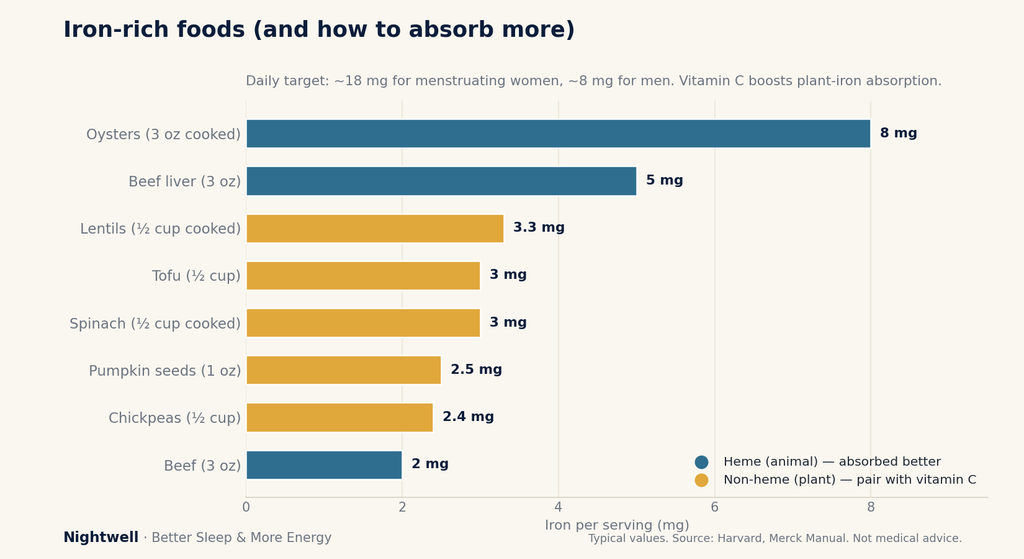
Add vitamin C to plant-iron meals. Lemon on lentils, peppers or tomatoes with beans, berries with fortified cereal, orange with a spinach salad. It’s one of the easiest wins in nutrition.
Move tea and coffee away from meals. The tannins in both reduce how much plant iron you absorb. Have your cup an hour or so before or after eating, not with lunch. (If you’re rethinking your coffee anyway, here’s when to have your last one for the sake of your sleep.)
Don’t take calcium supplements with your iron-rich meal, since they compete for absorption.
What that looks like on a plate, plant-based: fortified oats with strawberries for breakfast, then tea mid-morning rather than with the meal. A lentil and tomato soup with a squeeze of lemon for lunch. Pumpkin seeds as a snack. Tofu stir-fry with red peppers and broccoli for dinner. None of it is exotic — it’s just the same foods combined so that more of the iron actually gets absorbed.
Eat enough overall. Iron works as part of a whole diet: varied whole foods, plenty of vegetables, and enough protein. The broader picture is in our guide to eating for steady energy.
7. Recovery takes longer than feeling better
If a test does confirm low iron and you start treatment, many people feel their energy return within a few weeks. That’s encouraging, but it’s not the finish line. Refilling your stores takes months, so treatment usually continues after you feel fine, with a follow-up blood test to check. Stopping as soon as you feel better is one of the most common reasons people end up low again.
And if it isn’t iron?
Then you’ve crossed off one of the most common causes, which is worth knowing. The natural next check on the nutrition side is vitamin B12, which causes similar tiredness and follows the same test-first logic. Beyond food, it’s worth looking at sleep quality, stress and the other usual suspects in why you’re tired even after eight hours. And if you’ve been exhausted for weeks with no obvious reason, that’s always worth raising with a doctor.
General information only, not medical advice. Please don’t start iron supplements without a blood test and guidance from a healthcare professional, and keep any iron supplements well out of reach of children.
Comments on “Iron and Energy: Could Low Iron Be Behind Your Tiredness?”