
The short answer
Yes — regular exercise is one of the most reliable, natural ways to sleep better. People who move their bodies fall asleep faster, spend more time in deep sleep, and wake less during the night. The old warning that “working out in the evening ruins your sleep” turns out to be mostly a myth: for most people, moderate exercise even in the evening is fine. The one real caveat is intense exercise right before bed.
Why exercise helps you sleep
The benefits are well established, and they work through several channels at once. Physical activity raises your core body temperature; the gradual cool-down afterward mimics the natural temperature drop that signals your body it’s time to sleep. It also burns off stress and anxiety — two of the biggest barriers to falling asleep — and helps regulate the body clock and melatonin. You don’t need to train like an athlete, either: even about 30 minutes of activity a day can meaningfully improve sleep, and for people with insomnia, regular exercise has been shown to add roughly 15 minutes of sleep a night. There’s even evidence it can moderately reduce sleep apnea, sometimes without any weight loss.
The evening-exercise myth
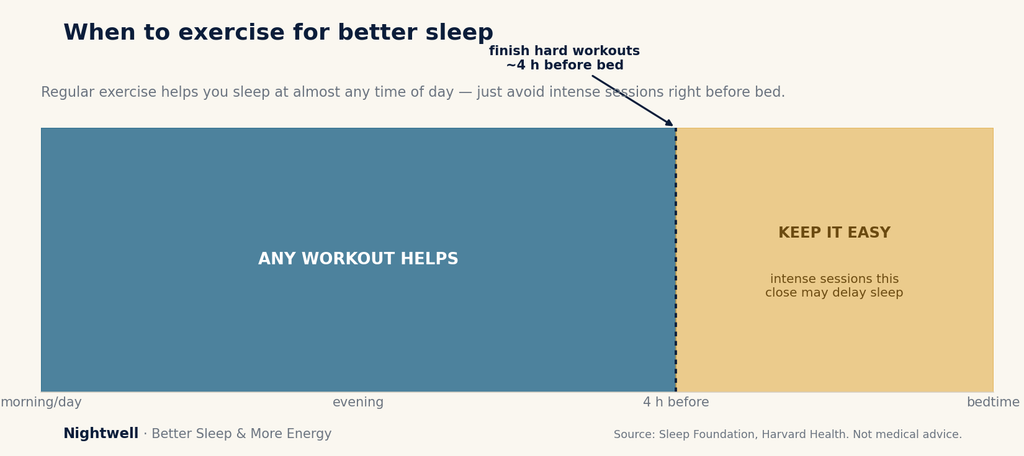
For years people were told to keep all workouts well away from bedtime. Newer research paints a more nuanced picture. A review of 23 studies found that evening exercise didn’t harm sleep — if anything, it helped people fall asleep faster and get more deep sleep. Moderate activity finishing 60–90 minutes before bed was fine for most.
The genuine exception is strenuous exercise close to bedtime. A large 2025 study tracking millions of nights found that hard, high-strain workouts ending within about four hours of bed were linked to delayed sleep, shorter sleep, a higher night-time heart rate, and lower recovery — because intense effort spikes your arousal and keeps your body temperature and heart rate up when they should be falling. The practical rule: finish hard workouts around three to four hours before bed. A gentle evening walk or light stretching, on the other hand, can actively help you wind down.
Does the time of day matter?
Less than you’d think. Some people sleep best after morning exercise, others after evening — and studies that let people keep their own routines found little difference, probably because folks naturally pick times that suit their body clock. So the honest answer is: the best time to exercise is whenever you’ll actually do it consistently. Consistency beats optimal timing every time.
That said, morning or daytime exercise has a nice bonus: if you do it outdoors, you get natural daylight at the same time, which helps anchor your circadian rhythm and reinforces a steady wake time — a foundation for good sleep at any age, though how much you need shifts over the years.
Making it work for your sleep
- Aim for regular, moderate activity — a brisk walk, cycling, swimming, or strength training a few times a week. The general guideline is about 150 minutes a week.
- Keep intense sessions earlier. If you can only train late, make the late ones gentle and save the hard efforts for daytime.
- If you have insomnia, stick to light-to-moderate exercise and ideally finish at least four hours before bed.
- Don’t expect it overnight. The sleep benefits build with a consistent habit over weeks, not from a single session.
And remember exercise is one lever among several: it works best alongside a cool, dark room, an evening wind-down routine, and going easy on late caffeine and alcohol. If you’re still tired despite a full night in bed, adding regular movement is one of the highest-return changes you can make.
The bottom line
Exercise is a genuine, evidence-backed sleep aid with no side effects and a long list of other health benefits attached. Move regularly, at whatever time you’ll stick to, and just keep the truly hard sessions a few hours clear of bedtime. Do that, and you’re using one of the most powerful natural tools there is for deeper, more restful nights — and more energy in the day.
This article is for general information and education and isn’t medical advice. If you have a heart condition or other health concern, check with a qualified healthcare professional before starting a new exercise routine.
Sources: Sleep Foundation — Best Time to Exercise for Sleep; Harvard Health — Does Exercising at Night Affect Sleep?; American Academy of Sleep Medicine — Exercise and Sleep