
The short answer
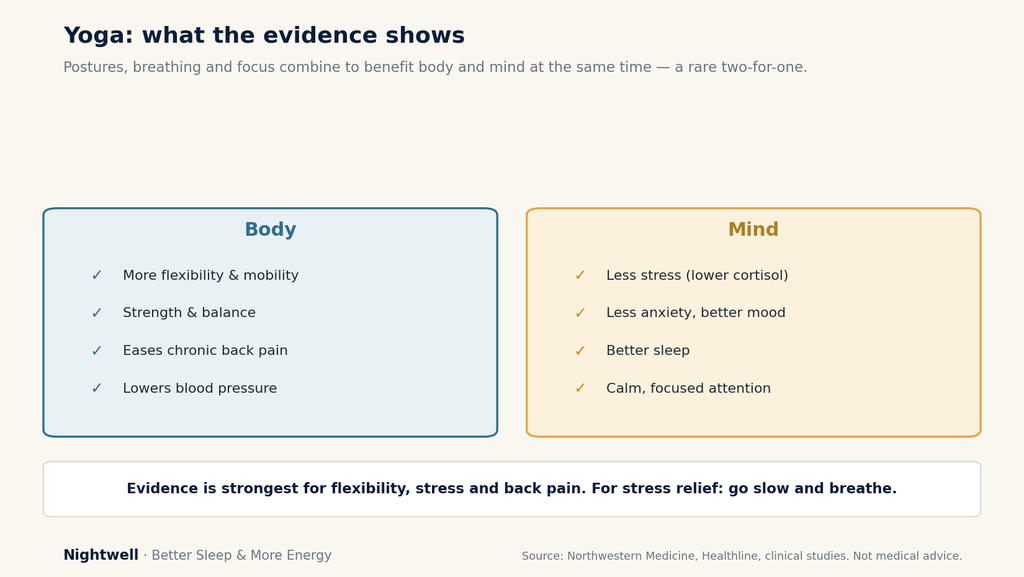
Yoga is one of the few activities that works on your body and your mind at the same time — and the science backs it up. By combining physical postures, controlled breathing, and focused attention, regular yoga measurably improves your flexibility, strength, and balance while lowering stress, easing anxiety, and improving sleep. The evidence is strongest for flexibility, stress relief, and chronic back pain, with promising effects on blood pressure and mood too. It’s not a magic cure-all, and for pure fitness it works best alongside other exercise — but as a genuine two-for-one for body and mind, few things compare.
What makes yoga different
Yoga isn’t just stretching, and it isn’t just relaxation. The word itself comes from a Sanskrit root meaning “to unite” — and that’s the essence of it: it unites three elements that most exercise keeps separate. There are the postures (asana) that stretch and strengthen the body; the breathing (pranayama) that calms the nervous system; and the focused attention or meditation that quiets the mind. It’s the combination of these three, moving together, that produces yoga’s distinctive whole-person effects — and why the benefits show up on both the physical and mental ledger at once.
The body benefits
On the physical side, the research is solid:
- Flexibility and mobility. This is yoga’s most reliable, measurable benefit — studies consistently show it increases joint range of motion and lengthens tight muscles, often within about eight weeks. It’s one of the best ways to maintain the mobility that keeps you moving well.
- Strength and balance. Holding and flowing between poses uses your bodyweight to build real strength, and the constant demand to stabilise improves balance and coordination — which helps protect against falls, as we cover in balance and flexibility.
- Relief from chronic back pain. Yoga is well-evidenced for easing chronic low-back pain, by improving flexibility, releasing muscle tightness, and strengthening the core — helping people move more comfortably.
- Lower blood pressure and better heart markers. Regular practice is linked to reduced blood pressure — one study found systolic pressure dropped around 5% after a month — along with improved heart-rate variability and lower inflammation.
And because it’s gentle on the joints, yoga is a prime example of the low-impact exercise that suits almost every age and fitness level.
The mind benefits
This is where yoga truly stands out, and where the mechanism is genuinely fascinating.
Stress relief. Yoga’s calming reputation is well earned, and it’s not just “it helps you relax.” Slow, controlled breathing — especially long exhalations — directly stimulates the vagus nerve, the main channel your body uses to shift out of fight-or-flight and into a calmer state. This raises heart-rate variability (a marker of a resilient stress response) and lowers cortisol, your main stress hormone. The effect can be striking: in one study, a single session of slow, meditative yoga cut salivary cortisol by around 42%. That connects directly to managing stress and burnout.
Anxiety, mood, and depression. People who practise yoga regularly tend to report fewer symptoms of anxiety and depression, and clinical trials support a real effect — part of the broader story of how movement lifts your mood.
Better sleep. Yoga improves sleep quality, partly by calming the nervous system and partly by nudging melatonin production. A specific practice called Yoga Nidra (“yogic sleep”) — a guided relaxation done lying down — has particularly strong evidence for easing insomnia and anxiety, making it a lovely addition to a wind-down routine.
Mindfulness and focus. By anchoring your attention to breath and movement, yoga cultivates present-moment awareness that carries over into calmer, more focused daily life.
An honest look: where’s the evidence strongest?
Yoga attracts big claims — that it cures almost everything — so it’s worth being clear-eyed. The evidence is genuinely robust for flexibility, stress reduction, chronic low-back pain, and modest blood-pressure improvements. It’s promising but still developing for some other conditions, and much of the research is preliminary in places. So treat yoga as a powerful complement to good health, not a replacement for medical care.
Two useful nuances from the research. First, for stress relief, slower is better: gentle, breath-focused styles produce the cortisol-lowering effect far more than fast, athletic “power yoga” — so if calm is your goal, choose a slow practice and really emphasise the breathing. Second, for pure fitness, yoga can stand alone for general health, flexibility, and moderate strength (especially vigorous styles), but if you want maximum cardiovascular conditioning or serious muscle-building, pair it with dedicated cardio and strength training. Yoga complements those beautifully rather than replacing them.
Finding your style
“Yoga” covers a wide range, so match the style to your goal:
- Hatha — gentle, slower-paced, great for beginners.
- Vinyasa / Power yoga — flowing and more athletic, better for a fitness and strength workout.
- Yin / Restorative — slow, deeply held stretches and relaxation; excellent for flexibility and stress relief.
- Yoga Nidra — guided lying-down relaxation, ideal for sleep and anxiety.
The single most important factor, though, is the one that applies to all exercise: the best style is the one you’ll actually do consistently. Don’t overthink it — try a class or a free online session, see what fits, and go from there.
Getting started
Yoga is remarkably accessible: you need only a mat and a bit of space, and it can be adapted for any age, body, or fitness level, including complete beginners and older adults. Start gentle, listen to your body, never force a pose into pain, and use props (blocks, straps, a chair) to make poses accessible. Even a short, regular practice pays off — research shows that just a couple of weekly sessions can measurably improve flexibility, balance, and core strength. If you have an injury, are pregnant, or have a health condition, let your instructor know and check with your doctor about which styles and poses are right for you.
The bottom line
Yoga earns its reputation as a mind-body practice because it genuinely delivers on both fronts at once: a more flexible, stronger, better-balanced body, and a calmer, less anxious, better-rested mind — all driven by the powerful combination of movement, breath, and attention. The science is strongest for flexibility, stress, and back pain, and the stress-melting magic lives in slow, breath-focused practice. It’s not a cure-all, and it pairs best with other exercise for full fitness — but as a single habit that soothes your nervous system while it strengthens your body, yoga is hard to beat. Roll out a mat, breathe slowly, and see what a little union of body and mind can do.
This article is for general information and education and isn’t medical advice. If you have an injury, are pregnant, or have a health condition, please talk to a qualified healthcare professional and your yoga instructor before starting.
Sources: Northwestern Medicine — Science-Based Benefits of Yoga; Healthline — Benefits of Yoga Supported by Science; ScienceInsights — Science-Backed Benefits of Yoga