
The short answer
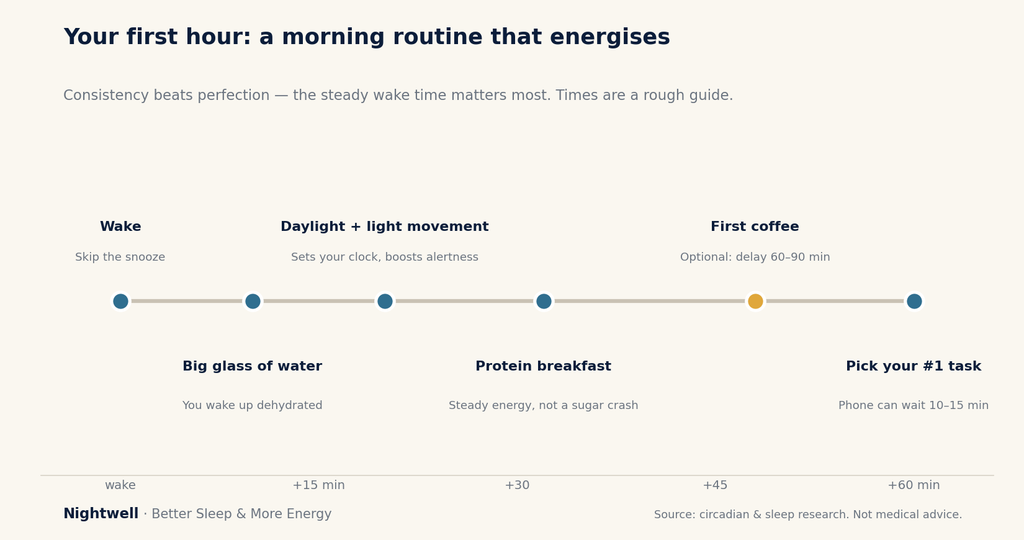
How you spend the first hour after waking sets the tone for your entire day — your energy, your focus, and your mood all take their cue from it. The “perfect” morning routine isn’t a rigid 5 a.m. ritual with ice baths and journaling; it’s a short, repeatable sequence of a few evidence-backed habits: wake at a consistent time, hydrate, get daylight and move a little, eat something balanced, and keep the phone (and maybe the coffee) waiting. None of it takes long, and the single most important ingredient isn’t any one step — it’s doing it consistently.
Start the night before: a consistent wake time
The foundation of a good morning is a steady wake-up time — ideally close to the same time every day, weekends included. A regular wake time anchors your body clock, which steadies your energy, mood, and sleep. And whatever you do, skip the snooze button. Those extra nine-minute dozes fragment your sleep and drop you back into a sleep stage you then get yanked out of again, which is why snoozing leaves you groggier, not more rested. Put the alarm across the room if you have to — getting up on the first ring is one of the simplest energy upgrades there is.
Step 1: Water before anything else
You’ve just gone seven or eight hours without a drink, losing water through breathing overnight, so you wake up mildly dehydrated — and your brain registers that as grogginess. Before your coffee, before your phone, drink a large glass of water (around 300–500 ml). It’s the fastest, cheapest way to shake off the morning fog, and it means your coffee becomes a bonus on top of proper hydration rather than your only fuel. It’s the simplest piece of staying well hydrated.
Step 2: Daylight and a little movement
This is the powerhouse step. Getting natural daylight into your eyes soon after waking suppresses the sleep hormone melatonin, triggers a healthy morning rise in cortisol (the good, alerting kind), and sets your body clock — which also programs better sleep that night. We go deep on this in morning sunlight, but the short version is: step outside for a few minutes, even on a cloudy day.
Pair it with light movement. You don’t need a workout — a short walk, some stretching, or a few minutes of easy exercise increases blood flow and oxygen, shaking off the stiffness and sluggishness of sleep. Movement and daylight together are a powerful natural wake-up call, far more effective than reaching straight for caffeine.
Step 3: A balanced breakfast (if you eat one)
What you eat first thing shapes your energy for hours. A high-sugar breakfast — pastries, sugary cereal — spikes your blood sugar and drops you into a foggy crash by mid-morning. A balanced breakfast with protein, fibre, and healthy fats gives you steady energy and better focus instead. Even something simple — eggs on wholegrain toast, or yogurt with fruit and nuts — does the job, as we cover in the best breakfast for energy.
One honest caveat: breakfast isn’t essential for everyone. The old “big breakfast is a must” line is an oversimplification — if you genuinely feel good skipping it or practising intermittent fasting, that’s fine. The rule that always holds is about what you eat when you do eat: build it around protein, not sugar.
Step 4: Keep the phone waiting
Here’s the habit that quietly wrecks more mornings than any other: grabbing the phone the instant you wake. The problem isn’t the phone itself — it’s what you do in those first five minutes. Diving into 47 notifications, work email, and the emotional rollercoaster of social media throws you into reactive mode and spikes stress hormones before your body has even finished waking up naturally. It hijacks your attention before you’ve had a chance to set it yourself.
The fix is simple: let the first tasks of your day be chosen by you — water, light, movement, an intention — not imposed by a screen. The phone can wait 10 to 15 minutes without the world ending. This protects your focus for the whole day and is a direct application of the deep-focus principles: guard your attention from the start.
Step 5: Consider delaying your coffee
This one’s optional and worth experimenting with. Because your natural cortisol is already peaking in the first 30 to 90 minutes after waking, some people find that delaying their first coffee by about 60 to 90 minutes lets that natural alertness do its job first — making the caffeine more effective later and softening the mid-morning dip. The direct evidence is still preliminary, so treat it as a personal test rather than a rule. (The exception: if you’re exercising in the morning, caffeine beforehand genuinely boosts performance, so go ahead.) Either way, it helps to understand how caffeine really works so you use it as a tool, not a crutch.
Step 6: Set your one priority
Before the day’s demands take over, take a minute to decide your single most important task and its first concrete step. This tiny act of intention means you start the day steering rather than reacting — and it’s far easier to build momentum from one clear next action than from a vague, overwhelming to-do list.
Build it small — consistency beats perfection
The biggest mistake people make with morning routines is trying to adopt ten new habits at once, then abandoning the lot within a week. Don’t. Pick one thing — maybe water first, or daylight, or leaving the phone alone — and do it every day until it’s automatic. Then add the next. A short, consistent routine creates far more sustainable energy than an ambitious one you can’t keep up, and most people start noticing the difference within one to two weeks. There’s no magic wake-up hour, either: what matters is what you do once you’re up, not whether it’s 5 a.m. or 8.
A final, honest note: no morning routine can undo a bad night’s sleep or paper over a real problem. If you’re doing all of this consistently and still feel exhausted after a couple of weeks, that’s worth taking to a doctor rather than pushing through — persistent fatigue can have medical causes, as we discuss across getting more energy naturally.
The bottom line
A great morning routine isn’t about willpower, expensive gadgets, or waking before dawn — it’s a handful of simple, evidence-backed habits done in the right order and, above all, done consistently. Wake at a steady time without snoozing, drink water, get daylight and move a little, eat something balanced, keep the phone and maybe the coffee waiting, and choose your first priority. Start with one habit, let it stick, and build from there. Nail your first hour and you hand yourself steadier energy and sharper focus for everything that follows.
This article is for general information and education and isn’t medical advice. If you consistently wake exhausted despite a good routine and adequate sleep, please talk to a qualified healthcare professional.
Sources: Best Morning Routine for Energy & Focus; Morning Routine Ideas to Boost Focus and Energy; Building Your Perfect Morning Routine: a Science-Based Guide
Comment on “The Perfect Morning Routine for Energy and Focus”