
The short answer
A drink before bed feels like it helps you sleep — and in one narrow way it does: alcohol is a sedative, so you drift off faster. But that’s a trick. As your body clears the alcohol over the next few hours, it flips your sleep from restful to fragmented, robbing you of the deep, restorative stages and setting up the classic 3 a.m. wake-up. The nightcap is one of the most common reasons people sleep “enough” and still feel wrecked.
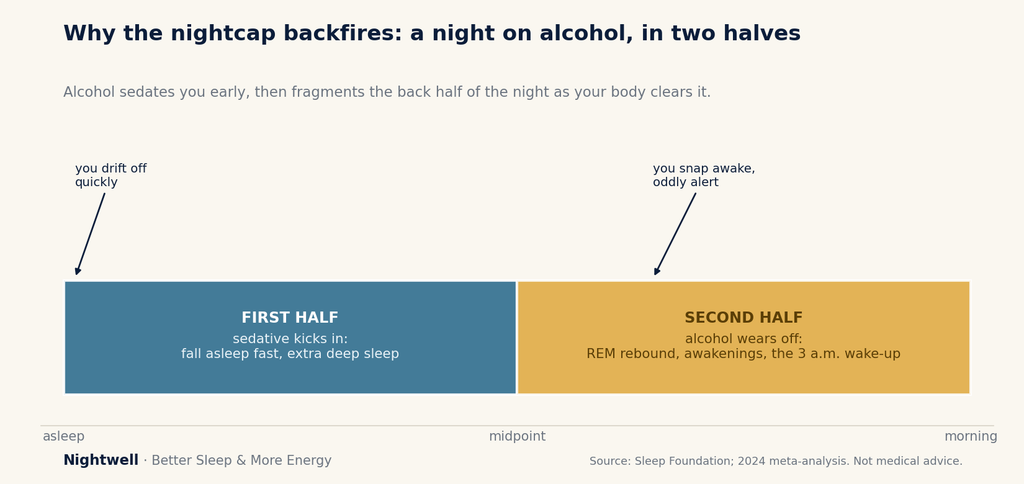
A night on alcohol, in two halves
The reason a nightcap is so deceptive is that it does two opposite things at two different times of night.
First half: alcohol amplifies the brain’s calming signals, so you fall asleep quickly and even get an early boost of deep, slow-wave sleep. This is the part that feels great and fuels the “it helps me sleep” belief.
Second half: as your blood alcohol drops, that sedation rebounds into the opposite. Your sleep becomes lighter and broken, awakenings pile up, and you often surface in the early hours feeling oddly wide awake. If that pattern sounds familiar, it’s the same mechanism behind waking at 3 a.m. — and alcohol is a leading trigger.
The REM problem
The stage alcohol hits hardest is REM sleep — the dreaming stage that handles memory, learning, and emotional regulation. A 2024 review pooling 27 studies found that alcohol both delays and shortens REM sleep, and it does so in a dose-dependent way: disruption shows up at around two standard drinks and gets worse with every drink after. Over repeated nights, your brain tries to claw back the lost REM in a “rebound,” which can bring vivid dreams, nightmares, and yet more disrupted, groggy nights.
This is why you can be unconscious for a full eight hours and still wake up unrefreshed — the hours were there, but the quality wasn’t. It’s one of the biggest reasons people feel tired even after a full night in bed.
The other ways it disrupts the night
- It relaxes your airway, which worsens snoring and raises the risk of the breathing pauses seen in sleep apnea.
- It dehydrates you and sends you to the bathroom, adding more awakenings.
- Tolerance builds fast. The sedative “help” fades with regular use, but the damage to sleep quality doesn’t — so you get less of the upside and keep all of the downside.
How to drink without wrecking your sleep
You don’t necessarily have to give up alcohol to sleep well — but timing and amount matter a lot:
- Leave a gap before bed. Experts suggest avoiding alcohol for at least three hours before sleep, so most of it clears before you turn in.
- Keep the amount down. Since REM disruption climbs with each drink, one is far gentler on your sleep than three.
- Have water alongside it, and a light bite — see what to eat and avoid for better sleep.
- Notice the pattern. If your worst, most broken nights line up with the nights you drank, that’s your body giving you a straight answer.
The bottom line
Alcohol is the great sleep impostor: it helps you fall asleep and then quietly dismantles the rest of your night. If you sleep a full night after drinking and still wake up foggy, this is usually why. You don’t have to be perfect — just move drinks earlier, keep them fewer, and watch how much better the back half of your night gets. Your 3 a.m. self will thank you.
This article is for general information and education and isn’t medical advice. If you’re concerned about your drinking or your sleep, please talk to a qualified healthcare professional.
Sources: Sleep Foundation — Alcohol and Sleep; Sleep Medicine Reviews (2024) — meta-analysis of alcohol and sleep
Comment on “Alcohol and Sleep: Why the Nightcap Backfires”