
The short answer
A nap can be a genuine superpower for your energy — or it can leave you groggier than before and wreck your night’s sleep. The difference comes down to two things: length and timing. Keep it to about 20 minutes, take it in the early afternoon, and you get a clean recharge. Drift into a long mid-afternoon nap and you risk waking up foggy and lying awake at bedtime.
Why 20 minutes is the sweet spot
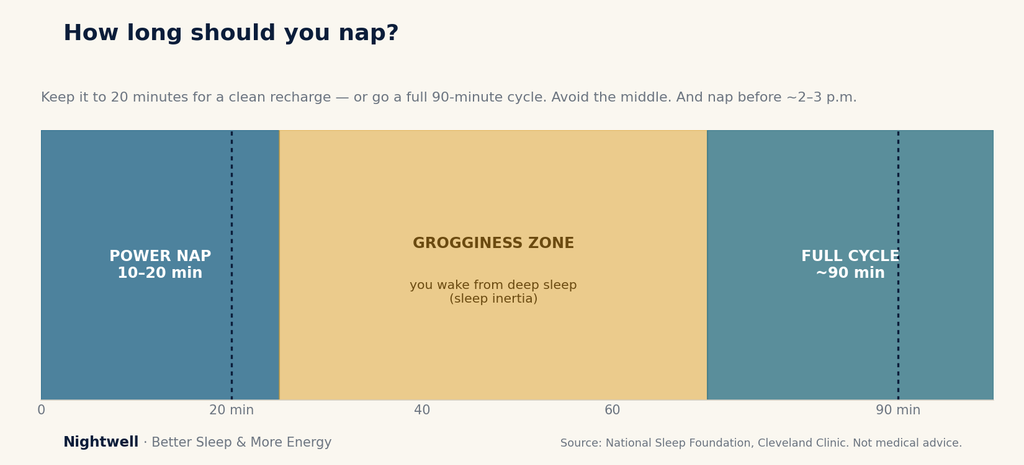
When you nap, you move through the same sleep stages you do at night, just compressed. A short nap of 10 to 20 minutes keeps you in the light stages, which is exactly what you want: you get the boost to alertness, mood, and focus without dropping into deep sleep. You wake up quickly and feel refreshed.
The problem is the middle ground — roughly 30 to 60 minutes. By then you’ve sunk into deep, slow-wave sleep, and if your alarm pulls you out of it, you get sleep inertia: that heavy, disoriented, “why do I feel worse” grogginess. It passes, but it can linger for 15 to 30 minutes and defeats the whole point of a quick recharge.
There’s one exception: if you genuinely have the time and need deeper rest, a full 90-minute nap lets you complete an entire sleep cycle and wake from light sleep again, so you sidestep the worst of the grogginess and even bank some REM. So the rule is simple: go short (about 20 minutes) or go full-cycle (about 90) — just avoid getting stranded in between.
Timing matters as much as length
Even a perfect 20-minute nap can backfire if you take it too late in the day. Nap in the early afternoon — most sleep experts suggest before about 2 or 3 p.m. — and it works with the natural post-lunch dip in alertness. Nap later than that and you start eating into your sleep pressure for the night, making it harder to fall asleep and setting up a frustrating cycle. If you already struggle to drop off at night, protect your evening wind-down by keeping naps early and short.
The coffee-nap trick
Here’s a genuinely clever one, backed by how caffeine works. Drink a coffee immediately before a 20-minute nap. Caffeine takes about 20 minutes to kick in, so you nap through its ramp-up and wake just as it hits your system — combining the alertness boost of the nap with the caffeine for a double lift. Just remember that caffeine lingers for hours, so this is an early-afternoon trick, not a 5 p.m. one — see when to stop drinking coffee.
When napping isn’t your friend
Naps aren’t right for everyone. If you notice that napping consistently makes it harder to sleep at night, or you never feel refreshed afterward, you may simply not be a napper — and forcing it can worsen night-time sleep. And if you’re relying on daily naps because you’re exhausted despite a full night in bed, the nap is treating a symptom; it’s worth looking at why your night sleep isn’t restoring you in the first place. Persistent, unexplained daytime sleepiness is worth raising with a doctor, since it can signal conditions like sleep apnea.
The bottom line
Used well, a nap is one of the fastest, cheapest ways to reset your energy and focus. The formula is easy to remember: about 20 minutes, early afternoon, and set an alarm so you don’t overshoot into the grogginess zone. If you need more, take a full 90-minute cycle instead. Treat naps as a top-up for good night-time sleep — not a replacement for it.
This article is for general information and education and isn’t medical advice. If you feel the need to nap most days or battle constant daytime sleepiness, please talk to a qualified healthcare professional.
Sources: National Sleep Foundation — The Benefits of Napping; Cleveland Clinic — Ideal Nap Length; CDC/NIOSH — Napping and Sleep Inertia