
The short answer
You can’t force sleep — but you can set the stage so it comes faster. The single most effective habit is a consistent wake-up time, even on weekends, because it anchors your body clock. Layer on a calm, predictable wind-down routine in the hour before bed, and most people fall asleep noticeably quicker. Here’s how the evening fits together.
Work backwards from bedtime
A good wind-down isn’t one thing at 10 p.m.; it’s a series of small signals across the evening that tell your body sleep is coming. Reading the timeline from earliest to latest:
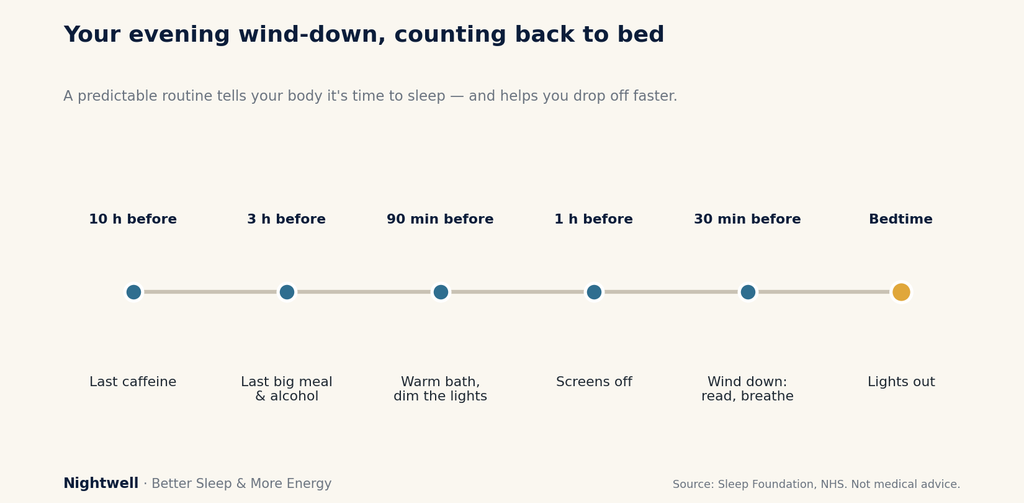
- ~10 hours before bed — last caffeine. Caffeine lingers far longer than people think, and even an afternoon cup can quietly cut into your sleep. If you often lie awake, this is a prime suspect — see what time to stop drinking coffee for the details.
- ~3 hours before — last big meal and alcohol. A heavy meal keeps your digestion working when it should be winding down, and while a nightcap makes you drowsy at first, it fragments the second half of the night.
- ~90 minutes before — warm bath or shower, and dim the lights. The post-bath temperature drop helps trigger sleepiness, and low light lets melatonin rise. Switch off overhead lights and use lamps.
- ~1 hour before — screens off. The bright light from phones and tablets suppresses melatonin, and the content keeps your brain engaged. This is the habit most people find hardest and most worth doing.
- ~30 minutes before — the actual wind-down. Read a paper book, stretch gently, journal, or do a few minutes of slow breathing. Same calming things each night, so your brain learns to associate them with sleep.
What to do in bed (and what not to)
Once the lights are out, the goal is to allow sleep, not chase it — because trying hard to fall asleep creates exactly the alertness that keeps you up. A few techniques that take the pressure off:
- Slow breathing. Make your exhale longer than your inhale for a few minutes. It’s simple, safe, and shifts your nervous system toward rest.
- Progressive muscle relaxation. Tense and release each muscle group from your face down to your feet, letting go of the tension you didn’t know you were holding.
- Cognitive shuffling. Let your mind wander over random, unconnected words or images. It occupies your brain just enough to crowd out worry without waking you up.
- Don’t watch the clock. Checking the time only feeds the “how much sleep am I losing” spiral. Turn it away from the bed.
And if you’re still wide awake after about 20 minutes, don’t lie there getting frustrated — get up, do something quiet and dim in another room, and go back when you feel sleepy. This same principle is the fix for those 3 a.m. wake-ups, too.
The foundation under all of it
Techniques help, but they work best on top of the basics. Keep the bedroom cool, dark, and quiet. Protect a steady wake time. And make sure you’re actually giving yourself enough hours for your age — no wind-down routine can compensate for a schedule that leaves you only six hours in bed. If you consistently take more than 20–30 minutes to fall asleep, several nights a week, for weeks, that’s worth raising with a doctor; ongoing insomnia has effective, evidence-based treatments.
The bottom line
Falling asleep faster isn’t about one clever trick — it’s about sending your body a consistent stream of “it’s time” signals and then getting out of your own way. Anchor your wake time, dim and disconnect in the last hour, build a short routine you can repeat every night, and let sleep arrive rather than forcing it. Do that consistently, and the gap between lights-out and drifting off tends to shrink on its own.
This article is for general information and education and isn’t medical advice. If trouble falling asleep persists for several weeks or affects your daily life, please talk to a qualified healthcare professional.
Sources: Sleep Foundation — How to Fall Asleep Fast; NHS — Fall Asleep Faster and Sleep Better
Comments on “How to Fall Asleep Faster”