
The short answer
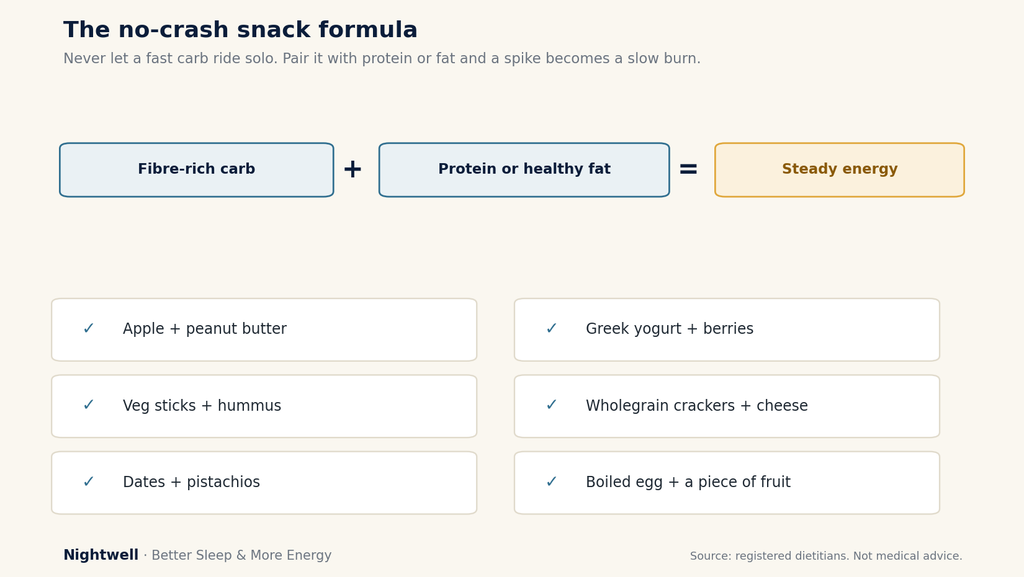
Snacking gets a bad reputation, but the problem is rarely that you snacked — it’s what you snacked on. Grab a sugary treat and you get a quick lift followed by a crash an hour later, which sends you straight back to the snack drawer. The fix is a simple formula: pair a fibre-rich carbohydrate with some protein or healthy fat. That single habit turns a snack from a blood-sugar spike into hours of steady, hunger-quieting energy — and it’s the easiest way to kill the afternoon cravings that derail most people’s day.
Why a lone sugary snack backfires
A biscuit, a chocolate bar, or a handful of sweets is almost pure fast carbohydrate. Eaten on its own, it floods your bloodstream with glucose, gives you a brief burst, and then triggers the insulin response that drops your blood sugar below where it started. Cue the crash: renewed tiredness, poor focus, and a craving for more sugar to climb back out. Think of it like a flash of gunpowder — a quick, explosive flare that’s gone in minutes. This is the same blood-sugar mechanism we cover in what to eat for steady energy, just in snack form.
A balanced snack behaves like a slow-burning log instead. The protein, fat, and fibre physically slow digestion, so glucose trickles into your blood over a longer window — a gentle, sustained warmth rather than a flare and a crash.
The formula that makes any snack “steady”
You don’t need special products or protein bars. You just need to stop letting a fast carb ride solo. Each element does a specific job:
- Fibre-rich carbohydrate gives you fuel, but the fibre slows its release — fruit, vegetables, whole grains, oats.
- Protein is the anchor: it keeps you full, blunts the blood-sugar spike, and quiets hunger for longer — yogurt, eggs, cheese, nuts, hummus.
- Healthy fat slows digestion further and helps you absorb certain vitamins — nuts, seeds, avocado, nut butter.
An apple alone is fine, but an apple with a spoon of peanut butter keeps your energy level for far longer. That’s the whole trick, applied to whatever you’ve got on hand.
Smart pairings that actually work
The graphic above shows six easy combinations. A few more, sorted by what you might have around:
- Fridge: Greek yogurt with berries; cottage cheese with sliced fruit; a hard-boiled egg with cherry tomatoes; cheese with an apple.
- Cupboard: wholegrain crackers with hummus, nut butter, or tinned tuna; a small handful of trail mix; oatcakes with cheese.
- Fruit-bowl: a banana with a few almonds; dates with pistachios (satisfies a sweet craving without the crash); apple slices with seed butter.
- Veg: carrot or pepper sticks with hummus or guacamole — fibre plus healthy fat in one crunchy bite.
Notice these are mostly whole, minimally processed foods. That’s deliberate: they steady your blood sugar and deliver fibre, vitamins, and minerals that packaged snacks usually don’t.
Watch the “healthy” snack traps
Plenty of snacks marketed as good for you quietly work against steady energy:
- Flavoured yogurts can carry as much sugar as dessert — choose plain and add your own fruit.
- Fruit juice and smoothies strip out the fibre that would slow the sugar; whole fruit is better.
- Cereal and granola bars are often sweets in disguise — check the label for low added sugar and real protein or fibre, not a sugary bar with a health halo.
- Dried fruit on its own is concentrated sugar; pair it with nuts (like the dates-and-pistachios combo) to steady it.
Portion and timing
A snack should bridge you between meals, not become an accidental third meal. Keep portions modest — a small handful of nuts rather than the whole bag, a single yogurt rather than a giant bowl. The goal is to take the edge off hunger and steady your blood sugar, not to fill up.
Timing matters too. If you tend to hit a wall mid-afternoon, a balanced snack about two to three hours after lunch heads off the crash before it lands — a smarter move than fighting the afternoon slump with sugar or another coffee. Around exercise, the rules bend a little: a small carb-and-protein snack an hour before a workout sustains you, and simple carbs like a banana right after intense exercise actually help your muscles recover.
Do you actually need to snack?
Here’s an honest point the snack industry won’t make: not everyone needs to snack at all. If you eat balanced, protein-anchored meals and sail through to the next one feeling fine, you don’t have to force a mid-afternoon snack just because it’s “healthy.” Snacking is a tool, not an obligation. The people who genuinely benefit are those who go long stretches between meals, feel a real energy or concentration dip, or get so hungry by mealtime that they overeat. If that’s you, a planned balanced snack prevents the crash and the ravenous over-ordering that follows.
The trap to avoid is emotional or boredom snacking — eating because a packet is open or the afternoon is dragging, not because your body needs fuel. A quick self-check: are you actually hungry, or just tired, thirsty, or restless? Mild dehydration in particular masquerades as hunger, so a glass of water first is often the real fix. If you are genuinely hungry, reach for the formula; if not, a walk or a drink may serve you better.
Make the smart choice the easy choice
Willpower fails when the only thing within reach is a vending machine. The reliable way to snack well is to make the good option the convenient one, so you’re not deciding while hungry:
- Batch-prep at the weekend: boil a few eggs, portion nuts into small bags or jars, wash and cut veg sticks, so a balanced snack is grab-and-go all week.
- Keep shelf-stable pairings at your desk or in your bag: single-serve nut butter packets, oatcakes, tinned tuna, a small bag of trail mix — so the easy choice is also the steady one.
- Pre-portion, don’t graze from the bag: put a handful in a bowl rather than eating straight from a large packet, where it’s easy to drift into a whole meal’s worth without noticing.
A note on evening snacks
Snacking late isn’t automatically bad, but what you choose matters even more at night. A heavy or sugary snack close to bed can disrupt your sleep, while a small, balanced option — a few nuts, a little yogurt, half a banana — won’t. If you’re often hungry in the evening, it’s worth knowing which foods help and hurt your sleep so your late snack works with your night rather than against it.
The bottom line
The afternoon crash isn’t a sign you need sugar — it’s a sign you need a smarter snack. Anchor a fibre-rich carbohydrate with protein or healthy fat, keep portions sensible, lean on whole foods, and watch the sugar hiding in “healthy” packaged options. Do that and snacking stops being the thing that spikes and crashes your energy, and becomes one of the simplest tools you have for staying steady, focused, and full between meals. Build a couple of go-to pairings into your routine and you’ll rarely find yourself raiding the biscuit tin at 3 p.m. again.
This article is for general information and education and isn’t medical advice. If you have a condition affecting blood sugar or diet, please talk to a qualified healthcare professional or registered dietitian.
Sources: Nutrifix — Healthy Snacks for Protein, Fibre and Energy; Peloton / dietitians — High-Fibre Snacks for Steady Energy