
Advertising disclosure: This article contains affiliate links. If you buy through one, Nightwell may earn a small commission at no extra cost to you. We only link to products we believe genuinely fit the advice on this page.
The short answer
Snoring is incredibly common — more than a quarter of adults do it regularly — and most of the time it’s a harmless nuisance you can improve with a few simple changes. But sometimes it’s the loudest clue to a serious condition: obstructive sleep apnea. The key is knowing the difference. This guide covers why we snore, the fixes that actually work, and — most importantly — the warning signs that mean it’s time to see a doctor.
Why we snore
Snoring happens when air can’t move freely through your nose and throat, so the relaxed tissues there vibrate as you breathe — that’s the sound. Anything that narrows or relaxes the airway can trigger it:
- Sleeping on your back, which lets the tongue and soft palate fall back and block the throat — the single most common cause.
- Alcohol and sedatives, which over-relax the throat muscles. A drink in the evening reliably makes snoring worse — one of many reasons the nightcap backfires.
- Nasal congestion from allergies, a cold, or a deviated septum.
- Extra weight around the neck, which narrows the airway (though slim people snore too).
- Smoking, which irritates and inflames the throat.
Simple fixes worth trying first
For ordinary, non-apnea snoring, lifestyle changes solve it for most people:
- Sleep on your side, not your back. The easiest, highest-impact change. If you roll onto your back in your sleep, a body pillow — or the old trick of a tennis ball sewn into the back of a shirt — can help you stay on your side. The right pillow helps keep your airway aligned too.
- Raise the head of your bed a few inches to improve airflow.
- Skip alcohol for a few hours before bed.
- Clear your nose. Treat allergies, and try nasal strips or a hot shower before bed if you’re congested.
- Address weight and smoking where relevant — both make a real difference.
Our pick to help you stay on your side: the Luxe neck-support pillow
Since back-sleeping is the top cause of ordinary snoring, anything that keeps you on your side with your neck aligned genuinely helps. A supportive contour pillow is one honest way to do that, and the one we’d point people to is Luxe’s neck-support pillow. To be clear, this is not an anti-snore gadget (see the caution just below) — it simply makes side-sleeping and airway alignment easier to hold through the night. It won’t touch snoring caused by apnea; for that, read the warning signs further down.
One honest caution: be wary of the many over-the-counter sprays, pills, and gadgets marketed to stop snoring. Most lack solid scientific evidence, so try the free lifestyle changes first and check with a doctor before spending money on aids.
When snoring is a warning sign
Here’s the part that matters most. Snoring becomes a red flag when it comes with signs of obstructive sleep apnea — a condition where the airway repeatedly collapses and breathing actually stops for seconds at a time, over and over, all night. Each pause jolts your brain just enough to disrupt sleep without fully waking you, which is why apnea leaves people exhausted no matter how long they were in bed.
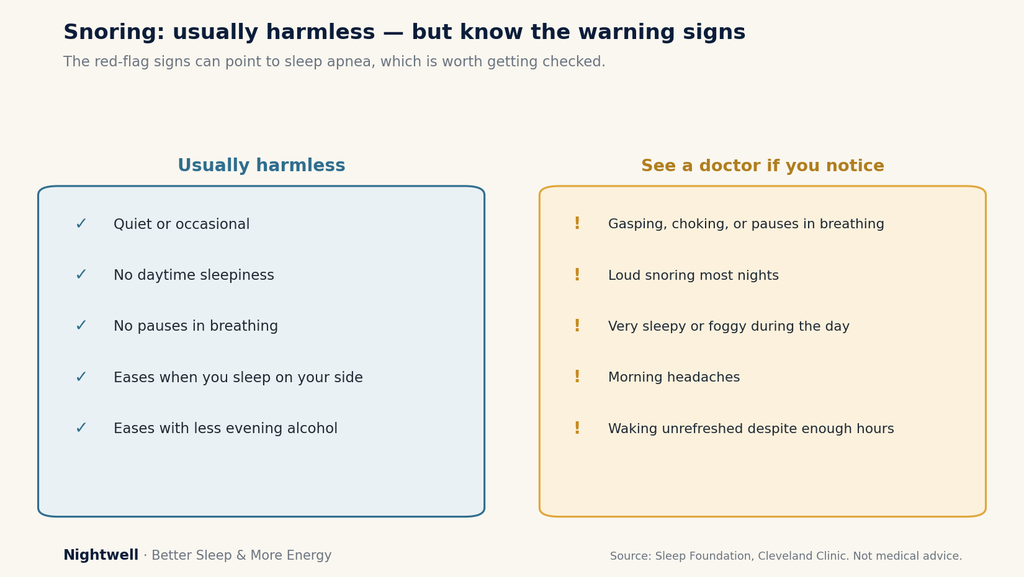
See a doctor if you (or your partner) notice any of these:
- Gasping, choking, or pauses in breathing during sleep — the clearest warning sign.
- Loud snoring that happens most nights.
- Excessive daytime sleepiness or brain fog.
- Morning headaches.
- Waking up unrefreshed despite a full night in bed.
This last one matters because untreated sleep apnea isn’t just about tiredness — over time it raises the risk of high blood pressure, heart disease, and stroke. If you’re constantly tired even after eight hours and you snore, it’s genuinely worth getting checked. The good news is that apnea is very treatable, most often with a CPAP machine that keeps the airway open, and sometimes with a dental device or other options your doctor can discuss.
The bottom line
Most snoring is harmless and responds well to simple changes — sleep on your side, cut evening alcohol, clear your nose, and raise your head. But snoring paired with gasping, daytime exhaustion, or morning headaches is your body waving a flag, and that’s not something to push through. When in doubt, a conversation with your doctor can rule out sleep apnea and get you — and whoever shares your bed — a quieter, healthier night.
This article is for general information and education and isn’t medical advice. If your snoring comes with any of the warning signs above, please talk to a qualified healthcare professional.
Sources: Sleep Foundation — Snoring; Cleveland Clinic — How to Stop Snoring; Johns Hopkins Medicine — Snoring