
The short answer
Magnesium is one of the few sleep supplements with genuine research behind it — but the effect is small, and the marketing wildly oversells it. The honest version: it helps most if your diet is genuinely short on magnesium (which is common), it works by correcting a shortfall rather than acting like a sleeping pill, and it’s cheap and safe enough to be worth a try. Just don’t expect a knockout.
What the evidence actually shows
This is a health-and-money decision, so here’s the real picture rather than the supplement-aisle pitch.
The research is real but modest. A 2021 review that pooled three small trials in older adults found magnesium shaved roughly 17 minutes off the time it took to fall asleep — but the authors rated the evidence as low quality, with small samples and design flaws. A more recent, better-run 2025 trial in 155 adults found that magnesium glycinate produced a small but statistically real improvement in insomnia scores by week four, with the biggest benefit in people who started with low dietary magnesium.
Put those together and the takeaway is consistent: magnesium delivers a small, genuine benefit, best understood as topping up a deficiency rather than drugging you to sleep. And a deficiency is common — roughly half of adults don’t get enough magnesium from food. If your intake is already good, don’t expect much.
Why the form matters more than the number on the bottle
Here’s the part almost no ad mentions. The weight printed on the label is usually the whole compound, not the magnesium itself.
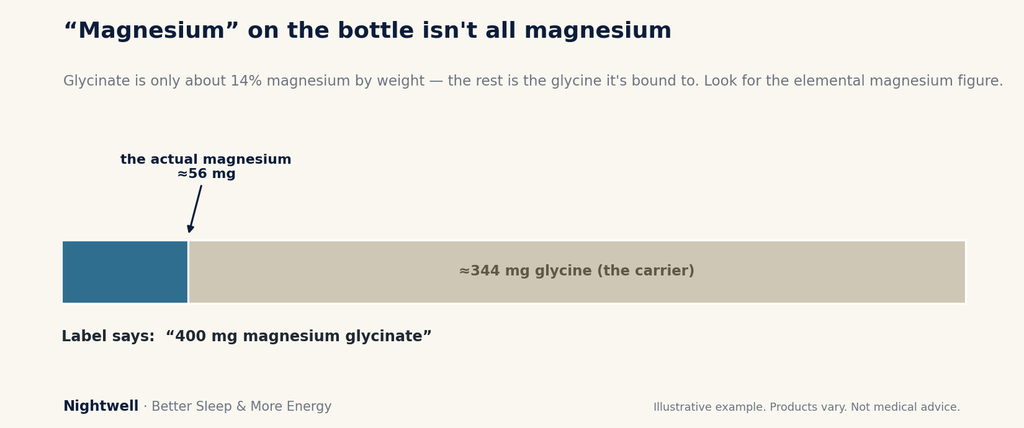
Magnesium glycinate is magnesium bound to the amino acid glycine, and it’s only about 14% magnesium by weight. So a bottle proudly labelled “400 mg magnesium glycinate” may deliver only around 50–60 mg of actual (elemental) magnesium — the rest is glycine. When you compare products, ignore the big number on the front and look for the elemental magnesium figure.
Glycinate is still the sensible form to choose for sleep, for two reasons. First, absorption: it’s taken up far better and is gentler on the gut than magnesium oxide, the cheap form found in most pharmacies — which is poorly absorbed and more likely to send you to the bathroom than to bed. (Ironically, many of the studies testing whether magnesium helps sleep used oxide.) Second, the glycine itself has a little sleep science of its own, since it helps lower core body temperature — the same drop that a cool bedroom encourages. That said, a typical glycinate dose delivers less glycine than the glycine sleep studies used, so treat it as a possible bonus, not a proven one.
If you want to try it: how to do it sensibly
- Dose: studies generally use 200–400 mg of elemental magnesium, taken about 30–60 minutes before bed. Note that health authorities set the upper limit for supplemental magnesium at 350 mg a day for adults — above that, loose stools become likely — so start low.
- Give it weeks, not one night. It isn’t a sedative and won’t knock you out. The trials that showed benefit ran for four to eight weeks, with effects building gradually.
- Try food first. Leafy greens, nuts, seeds, legumes, and whole grains are all rich in magnesium. Since the benefit is mostly about correcting a shortfall, fixing your diet may do the same job for free.
- Check with a doctor if you take other medications or have kidney issues, since magnesium can interact or build up.
Don’t skip the free stuff
The most honest thing to say about any sleep supplement is that it works best after the basics, not instead of them. A pill won’t out-perform a consistent wake time, an evening wind-down routine, a cool dark room, and getting enough hours for your age. If those are in place and you still want a low-risk nudge, magnesium is a reasonable one to reach for — with your expectations set to “small.”
The bottom line
Magnesium for sleep is a rare supplement that isn’t pure hype: the evidence is genuine, just modest, and strongest for people who were low to begin with. Choose the glycinate form, judge products by their elemental magnesium content, give it a few weeks, and keep the fundamentals in place. It’s a sensible, cheap, low-risk experiment — not the miracle the bottle implies.
This article is for general information and education and isn’t medical advice. Talk to a qualified healthcare professional before starting any supplement, especially if you take other medications or have a health condition.
Sources: NIH Office of Dietary Supplements — Magnesium; Men’s Fitness — A Real but Small Effect, Wrapped in Big Claims