
The short answer
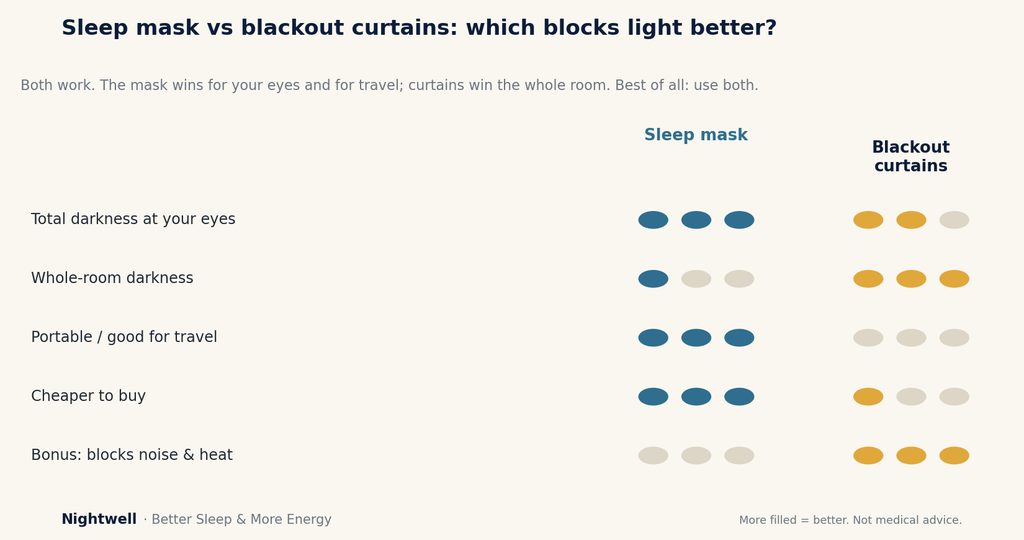
Both blackout curtains and sleep masks work — darkness is what matters, and either can deliver it. If you want your whole room dark (and don’t like anything on your face), curtains win. If you want guaranteed darkness right at your eyes, something cheap, and something you can pack for travel, a mask wins. And if you want the deepest darkness of all, the honest answer is: use both.
Why darkness matters in the first place
Your body decides whether it’s day or night largely by the light hitting your eyes. In darkness, your brain releases melatonin, the hormone that lets you fall and stay asleep; even small amounts of light — a streetlamp through a gap, a charging LED, early summer dawn — can suppress it and nudge you toward lighter, more broken sleep. So a genuinely dark room isn’t a luxury; it’s one of the simplest, highest-return upgrades you can make, right alongside keeping the bedroom cool.
How they compare
Blackout curtains — the whole-room fix
Good blackout curtains can block the large majority of outside light and turn even a daytime bedroom dark, which is why they’re a lifesaver for shift workers and for anyone woken by early light. They come with genuine bonuses too: heavier fabric muffles some street noise and helps hold the room temperature steady. The trade-offs are cost (especially for large or custom windows), a bit of installation effort, and the fact that light can still leak around the edges if they’re not fitted well. And they only work at home — no help in a hotel.
Sleep masks — darkness that travels
A sleep mask blocks light right at the source: your eyes. That makes it the more reliable option for total darkness regardless of the room, and it’s cheap, portable, and perfect for travel, hotels, planes, or a partner who wants the lights on. The downsides are comfort-related — some people simply can’t stand wearing something on their face, and a poorly fitting mask can slip or press uncomfortably. It also does nothing for a partner or child sharing the room, since it only darkens things for the wearer.
So which should you buy?
Match the tool to your situation:
- Woken by early daylight or a streetlight, at home? Start with blackout curtains — they fix the room for everyone in it.
- Travel often, sleep during the day, or share a room with someone who needs light? A mask is the flexible, affordable pick.
- Want the darkest possible sleep? Combine them. Curtains kill most of the light; the mask erases whatever leaks through. Many people who are serious about sleep use both.
Whichever you choose, darkness is only one piece. Pair it with a steady wake time, an evening wind-down routine, and screens off before bed — and you remove one of the most common reasons people surface in the night, including those who keep waking at 3 a.m.
The bottom line
There’s no single winner here, because they solve slightly different problems. Curtains darken the room; masks darken your eyes; together they darken everything. Pick based on whether you value whole-room coverage or portability and price — and if in doubt, a good sleep mask is the cheapest, most reliable way to test whether a properly dark room improves your sleep before you invest in curtains.
This article is for general information and education and isn’t medical advice. If you sleep in a dark room and still wake unrefreshed, please talk to a qualified healthcare professional.
Sources: Sleep Foundation — Bedroom Environment and Light; Sleep Foundation — Sleep Masks and Darkness