
The short answer
Caffeine is the most widely used stimulant in the world, and it genuinely works — it sharpens focus, lifts mood, and can even improve physical performance. But here’s the thing most people never learn: caffeine doesn’t actually give you energy. It borrows alertness from later in your day by blocking the brain signal that tells you you’re tired. Understand how that works and you can use caffeine as a precise tool instead of a crutch — getting the lift without the jitters, the tolerance creep, or the crash.
How it works: the adenosine trick
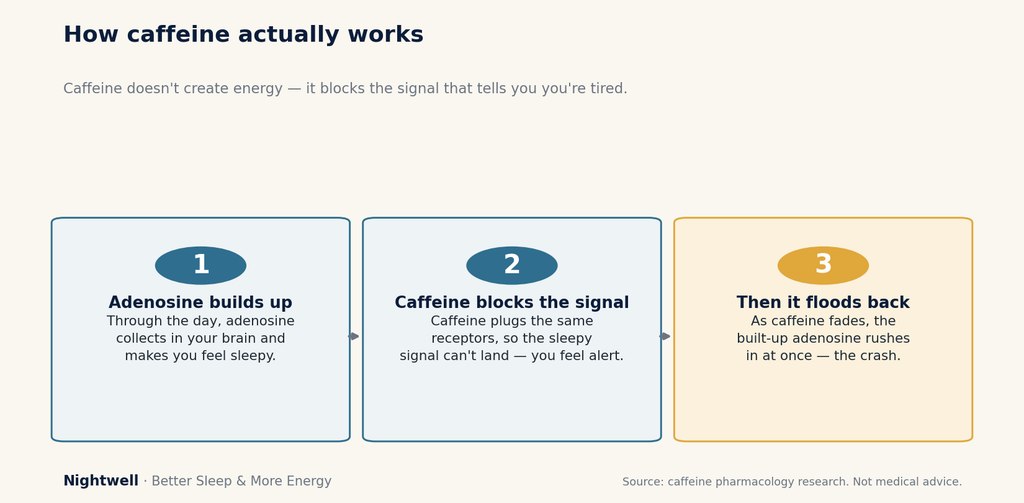
All day long, a molecule called adenosine builds up in your brain. The more that accumulates, the sleepier you feel — it’s the chemical basis of “sleep pressure,” the growing urge to rest that peaks by bedtime. Adenosine does this by docking into specific receptors and quieting down your nerve cells.
Caffeine’s molecular shape is just similar enough to slip into those same receptors and plug them — without activating them. It’s what scientists call a competitive antagonist: it doesn’t switch adenosine off, it simply blocks the parking spaces so adenosine can’t deliver its “you’re tired” message. With the drowsiness signal muffled, your natural alertness comes through, and there’s a knock-on rise in stimulating brain chemicals like dopamine and norepinephrine. That’s the lift.
The crucial catch is that the adenosine hasn’t gone anywhere. It’s still building up behind the blockade. So when the caffeine wears off and clears those receptors, all that accumulated adenosine floods in at once — and you can feel more tired than before. That’s the caffeine crash, and it’s why caffeine is best understood as a loan, not a gift. This is exactly the mechanism behind the mid-afternoon dip when people caffeinate early or heavily, and it’s covered from the energy angle in our piece on the afternoon slump.
The real benefits
None of that means caffeine is bad — used well, it’s a legitimately useful substance with solid evidence behind it:
- Alertness and focus. The core effect: it reliably reduces the feeling of fatigue and improves reaction time and concentration.
- Physical performance. Caffeine is one of the best-studied performance aids there is. At doses of roughly 3 to 6 mg per kilogram of body weight, it improves endurance, high-intensity, and strength exercise — partly by reducing your perception of effort.
- Mood. A moderate dose tends to lift mood and motivation.
Caffeine peaks in your bloodstream around 30 to 60 minutes after you drink it, so that’s when to expect the effect — useful to know if you’re timing it before a workout or a demanding task.
Why it stops working: tolerance
If your morning coffee doesn’t hit like it used to, you’re not imagining it. When you use caffeine daily, your brain notices that adenosine is being blocked and compensates the only way it can: it builds more adenosine receptors. With more docking spots available, your usual dose now blocks a smaller fraction of them, so adenosine still gets through and you feel less of the effect. The caffeine hasn’t weakened — your receptor count has grown.
This tolerance can begin within a few days and often blunts the stimulant effect substantially within one to three weeks. It’s also why quitting suddenly causes withdrawal — all those extra receptors are suddenly wide open to adenosine, producing the classic caffeine-withdrawal headache and fatigue. The good news: the fix is simple. Cutting back or taking a break for a week or two lets your receptors return to baseline and restores caffeine’s punch. Some people periodically “reset” for exactly this reason.
How to use caffeine well
Here’s how to get the most out of it and the least of its downsides.
Keep the dose moderate. More isn’t better once you’re past the point of feeling alert — extra caffeine mostly buys you jitters, anxiety, and a bigger crash. Most healthy adults can handle up to about 400 mg a day, but many feel best on less. Find the smallest dose that works for you.
Mind the timing — at both ends of the day. Because caffeine lingers for hours, drinking it too late quietly sabotages your sleep, which then makes you more tired tomorrow and more dependent on caffeine — a self-perpetuating loop. Knowing when to stop drinking coffee is one of the highest-value habits there is. As for the morning: adenosine is naturally low right after you wake, so some people find they get more mileage by delaying their first coffee an hour or so, extending the alertness into late morning rather than “wasting” it when they’re already fresh. The evidence here is mixed and individual — treat it as an experiment, not a rule.
Don’t chase the crash with more caffeine. When the dip hits, a second or third dose just deepens the hole and pushes caffeine later into the day. A walk, some water, or a short nap resets you without mortgaging tonight’s sleep.
Avoid it on an empty stomach if it bothers you. For some people, coffee with nothing else causes jitters or stomach upset; pairing it with food smooths that out.
Remember it’s caffeine, wherever it comes from. Coffee, tea, cola, chocolate, pre-workout, and energy drinks all count toward your daily total — and energy drinks in particular pack wildly variable, sometimes very high amounts, as we cover in do energy drinks actually work.
Why people react so differently
Ever wonder how a friend can drink espresso after dinner and sleep fine while one afternoon cup keeps you up? A lot of it is genetics. An enzyme called CYP1A2 breaks caffeine down, and people fall roughly into fast and slow metabolizers. Slow metabolizers feel caffeine longer and more strongly, and are more prone to jitters and sleep disruption from the same dose. Pregnancy, some medications, and liver function shift how quickly you clear it too. So the “right” amount and timing is genuinely personal — pay attention to how you respond rather than copying anyone else.
The honest bottom line
Caffeine is a genuinely useful tool: it blocks your brain’s tiredness signal to deliver real, reliable alertness and better performance. But it’s a loan against your later energy, not a free source of it — the adenosine you’re holding back always collects the debt as a crash. Use it deliberately: a moderate dose, timed so it doesn’t wreck your sleep, without escalating to fight the dip, and with the occasional reset to keep it effective. Do that, and caffeine stays a sharp, dependable ally. Just remember it can’t replace the things that actually generate energy — good sleep, steady meals, hydration, and movement. Caffeine works best sitting on top of those, not standing in for them. If you’re constantly tired even after a full night in bed, no amount of coffee is the real answer.
This article is for general information and education and isn’t medical advice. If you have a heart condition, anxiety, are pregnant, or are sensitive to caffeine, please talk to a qualified healthcare professional about your intake.
Sources: Caffeine and adenosine — the coffee crash explained; How caffeine tolerance builds (receptor upregulation); Time course of tolerance to caffeine’s performance benefits (NIH)
Comment on “Caffeine: How It Really Works (and How to Use It Well)”