
The short answer
Brain fog — that fuzzy, sluggish feeling where you can’t concentrate, lose your train of thought, or grope for words that won’t come — is incredibly common and, most of the time, very fixable. The first thing to understand is that brain fog isn’t a diagnosis; it’s a symptom, your brain’s way of signalling that something is off. Usually the culprit is an everyday one: poor sleep, dehydration, blood-sugar swings, stress, or too little movement. Clear those up and the fog usually lifts. When it doesn’t — when it’s severe or drags on for weeks — that’s the signal to see a doctor.
What brain fog actually is
“Brain fog” is a plain-language term for a cluster of cognitive symptoms: difficulty concentrating, forgetfulness, mental fatigue, slowed thinking and reaction time, and trouble finding words. You might walk into a room and forget why, lose your place mid-sentence, or need to reread the same paragraph three times. It’s not a disease in itself — it’s how it feels when your brain isn’t processing at its usual speed. That’s actually reassuring, because it means the fix lies in finding and addressing whatever’s causing it, rather than treating “brain fog” as some mysterious condition.
The everyday causes (the fixable ones)
For most people, most of the time, brain fog traces back to lifestyle factors that are entirely within reach:
- Poor or insufficient sleep. Your brain consolidates memories and clears waste during sleep. Even mild, ongoing sleep loss accumulates into real cognitive fog — and remember that eight hours of broken sleep can leave you as foggy as a short night, which is why some people feel tired even after a full night in bed.
- Dehydration. Even mild dehydration measurably impairs concentration and brings on fatigue and headaches. It’s one of the most common and most overlooked causes.
- Blood-sugar swings. A sugary, refined-carb diet spikes and crashes your blood sugar, and the crash shows up as foggy, unfocused thinking. Steady eating steadies your mind — the core of eating for steady energy.
- Chronic stress. Prolonged stress floods your body with cortisol, which impairs the brain regions responsible for memory and focus. When your mind is full of worry, there’s simply less bandwidth left for clear thinking.
- Sitting still. A sedentary day reduces blood flow and oxygen to your brain, dulling your thinking. Movement is one of the fastest ways to sharpen up.
- Too much screen and multitasking. Juggling tabs, notifications, and tasks fragments your attention and produces its own mental exhaustion.
- Too much caffeine or alcohol, both of which disrupt sleep and can leave you foggier the next day.
The nutrient angle
Sometimes the fog has a nutritional root. Deficiencies in vitamin B12, iron, vitamin D, and omega-3 fatty acids are all linked to cognitive symptoms. This matters because these are testable and treatable — but also because you shouldn’t guess. If you’re in an at-risk group and foggy, it’s worth reading up on iron and energy and vitamin B12 and energy, and getting a blood test rather than self-prescribing supplements.
The quick reset: what to do when the fog rolls in
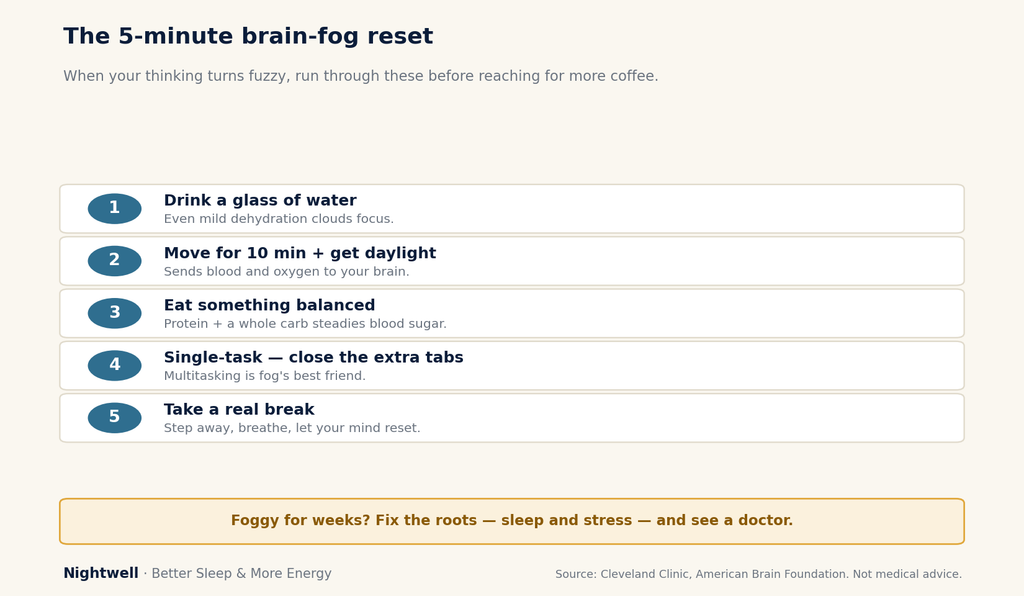
When your thinking turns to mush mid-afternoon, resist the urge to just pile on more coffee — that often deepens the crash. Instead, run through the quick reset in the graphic above:
- Drink a glass of water — the fastest possible fix if dehydration is the issue.
- Move for ten minutes and get some daylight. A brisk walk sends blood and oxygen to your brain and clears the head; even 20 minutes of walking noticeably lifts mental clarity. Pairing it with sunlight adds an extra alertness kick, as we cover in morning sunlight.
- Eat something balanced — protein plus a whole-food carbohydrate — if a blood-sugar dip is behind it, rather than a sugary snack that crashes you again.
- Single-task. Close the extra tabs, silence notifications, and do one thing at a time. Multitasking is fog’s best friend.
- Take a real break. Step away from the screen, breathe slowly for a minute, and let your attention recover. Pushing harder through fog rarely works; a genuine pause does.
The longer-term fix: address the roots
Quick resets buy you clarity in the moment, but persistent fog needs you to fix the foundations — the same foundations behind energy in general, laid out in how to get more energy naturally:
- Protect your sleep: consistent schedule, 7–9 hours, screens off before bed.
- Move daily: regular activity keeps blood flowing to your brain and lowers stress.
- Eat for your brain: whole foods, plenty of fibre, omega-3-rich foods like oily fish, and less ultra-processed food and added sugar.
- Manage stress actively: meditation, breathing, time in nature, and simply doing less — chronic overload is a leading fog-maker.
- Go easy on alcohol, and keep caffeine sensible and early.
Give these a couple of weeks of consistency and most everyday brain fog clears noticeably.
When to see a doctor
Occasional fog during a stressful, sleep-deprived, or off week is normal. But brain fog is worth getting checked if it’s severe, persistent (lasting weeks), worsening, or interfering with your work, studies, or relationships — or if it lingers after an illness or comes with other concerning symptoms. Persistent cognitive symptoms can point to treatable underlying causes such as an underactive thyroid, diabetes, anemia, a vitamin deficiency, anxiety or depression, hormonal changes, a medication side effect, or lingering effects after an infection. A doctor can use your history and simple blood tests to find the cause and treat it at the root. Don’t just push through month after month — as one clinic puts it, brain fog is your brain telling you something needs attention.
The bottom line
Brain fog feels alarming, but it’s usually your brain flagging an unmet need rather than anything sinister. Most of the time the fix is close at hand: drink water, move and get daylight, eat steadily, single-task, and take real breaks in the moment — and protect sleep, movement, nutrition, and stress over the longer run. Do that and the haze tends to lift on its own. If it doesn’t — if the fog is heavy, stubborn, or spreading into your daily life — treat that as useful information and see a professional. Either way, clearer thinking is almost always within reach.
This article is for general information and education and isn’t medical advice. If brain fog is severe, persistent, worsening, or affecting your daily life, please talk to a qualified healthcare professional to identify the cause.
Sources: Cleveland Clinic — Brain Fog; American Brain Foundation — What Is Brain Fog?; Healthline — Brain Fog
Comment on “How to Beat Brain Fog and Think Clearly”